Why Framing Matters
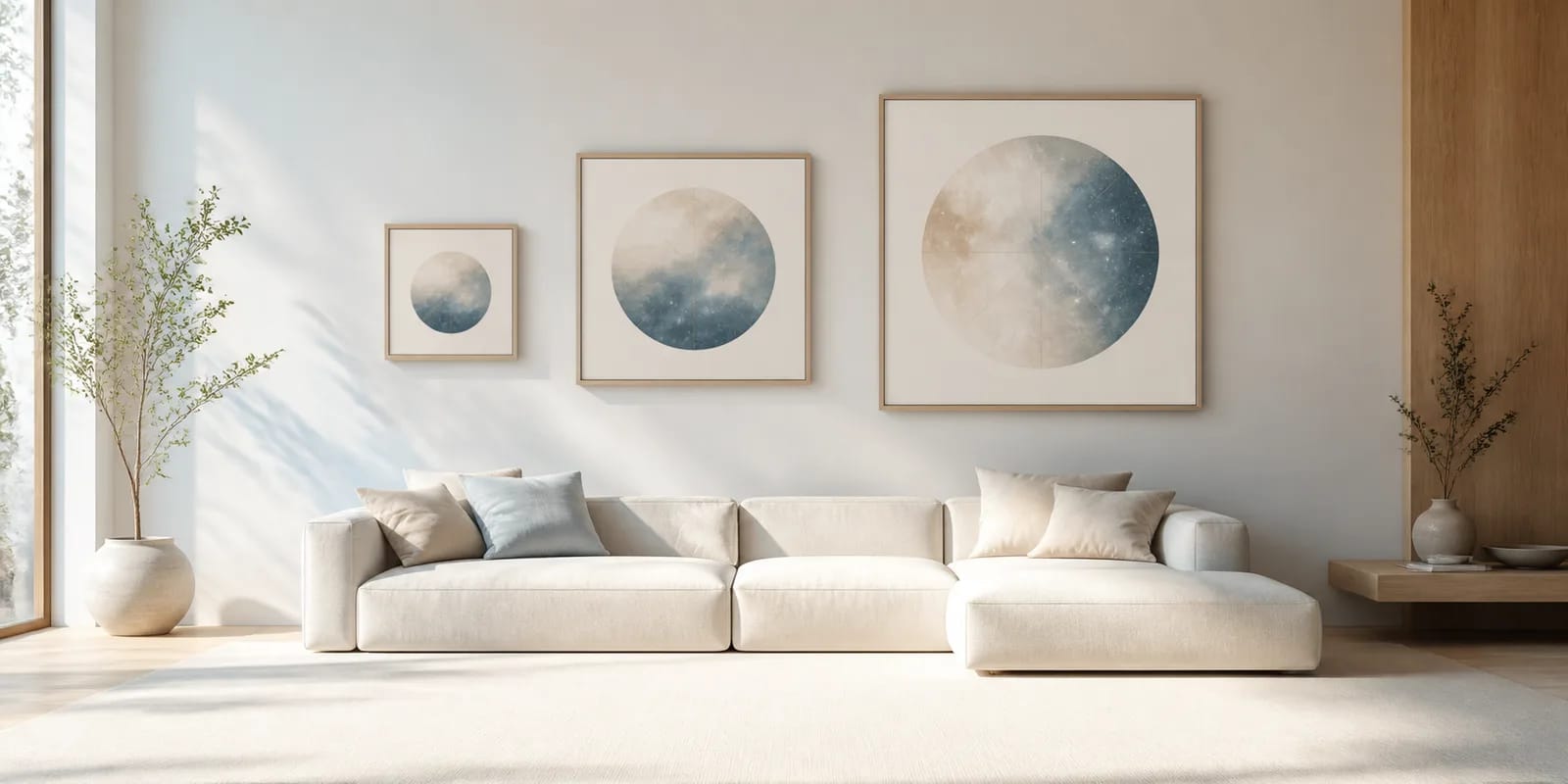
A star map without a frame is just a poster. A star map in the right frame becomes a piece of art that anchors a room. The frame you choose affects how the map looks, how long it lasts, and how it integrates with your home decor.
The good news: framing a star map is straightforward. You do not need to be a DIY expert. This guide covers everything — from choosing a frame to hanging it on the wall.
Choosing the Right Frame Style
Black Frames
The most popular choice, and for good reason. Black frames create clean contrast against both light and dark star map designs. They work in virtually any room and style — modern, minimalist, traditional. If you are unsure, black is always a safe bet.
White Frames
White frames add lightness and work beautifully with dark-background star maps. They are ideal for bright, airy rooms — Scandinavian interiors, nurseries, or modern living spaces. The contrast between a white frame and a dark navy or black sky is striking.
Natural Wood Frames
Oak, walnut, or pine frames bring warmth and organic texture. They pair well with earth-toned or classic star map designs. Natural wood works especially well in rustic, bohemian, or mid-century modern settings.
Gold or Metallic Frames
For a touch of elegance, thin gold or brass frames elevate a star map into a sophisticated art piece. These work best in bedrooms, dining rooms, or anywhere you want a hint of luxury. Keep the frame thin — a heavy gold frame can overwhelm the design.
Mat (Passe-Partout) Options
A mat is the border between the frame and the print. It serves both aesthetic and practical purposes — it adds visual breathing room and prevents the print from touching the glass.
White Mat
The classic choice. A white mat works with any star map design and any frame color. It creates a clean, gallery-like presentation.
Cream or Off-White Mat
Slightly warmer than pure white, cream mats soften the overall look. They pair especially well with natural wood frames.
Black Mat
A black mat with a black frame creates a dramatic, modern look — the star map seems to float in darkness. This works best with star maps that have light elements against a dark background.
No Mat
Skipping the mat gives a contemporary, edge-to-edge look. This works well for larger prints where the design already includes its own border. Just make sure to use spacers so the print does not touch the glass directly.
Glass Types
The glass you choose affects both the look and the longevity of your star map.
Regular Glass
The standard option. It is affordable and provides basic protection. The downside: it reflects light, which can make the map hard to see from certain angles.
UV-Protective Glass
Blocks harmful ultraviolet rays that cause colors to fade over time. If your star map will hang in a spot that gets direct or indirect sunlight, UV glass is worth the extra cost. It typically adds $10-20 to the framing price.
Anti-Glare Glass
Treated to reduce reflections, making the print easier to see in bright rooms. The tradeoff is a slightly softer, more diffused look. Good for living rooms with large windows.
Museum Glass
The premium option — combines UV protection with anti-reflective coating. The result is crystal-clear viewing with maximum protection. Museum glass is expensive (often $50+ extra), but it makes a real difference for a piece you want to display prominently for years.
Acrylic/Plexiglass
Lighter than glass and shatter-resistant, making it ideal for large frames or homes with children. Modern acrylic options offer UV protection and anti-glare properties comparable to glass.
Sizing Your Frame
The frame must match your print size. Here are the standard sizes for OwnStarMap prints:
| Print Size | Frame Size (No Mat) | Frame Size (With Mat) |
|---|---|---|
| US Letter (8.5 x 11") | 8.5 x 11" | 11 x 14" |
| A2 (16.5 x 23.4") | 16.5 x 23.4" | 20 x 28" |
| 16 x 20" | 16 x 20" | 20 x 24" |
| 18 x 24" | 18 x 24" | 22 x 28" |
When using a mat, buy a frame one standard size larger than your print. Most frame shops and online stores sell pre-cut mats for standard size combinations.
DIY Framing vs. Professional Framing
DIY Framing
Best for: Standard sizes, budget-conscious buyers, people who enjoy hands-on projects.
Buy a ready-made frame from IKEA, Amazon, or a local home goods store. Ready-made frames for standard sizes typically cost $15-40. Add a pre-cut mat for $5-15.
Tips:
- Measure your print first — do not guess
- Lay the print face down on a clean surface before assembling
- Use acid-free backing board to prevent yellowing over time
- Clean the glass on both sides before closing the frame
Professional Framing
Best for: Non-standard sizes, premium materials, or anyone who wants a perfect result without the effort.
A professional framing shop offers custom-cut mats, specialty glass, and archival mounting. Expect to pay $60-150 depending on size and materials. The result is noticeably more polished.
Many local frame shops also offer discounts for simple jobs like framing a flat print — it is worth asking.
Where to Buy Frames
- IKEA — Affordable, clean designs. The RIBBA and LOMVIKEN lines are popular for star maps.
- Amazon — Huge selection at every price point. Look for frames with real glass, not plastic.
- Local frame shops — Custom sizes, expert advice, professional mounting. Support local businesses.
- Desenio / Poster Store — Online shops specializing in poster frames, often with mat options included.
- Michaels / Hobby Lobby (US) — Regular sales on frames, often 50% off.
Hanging Tips
Height
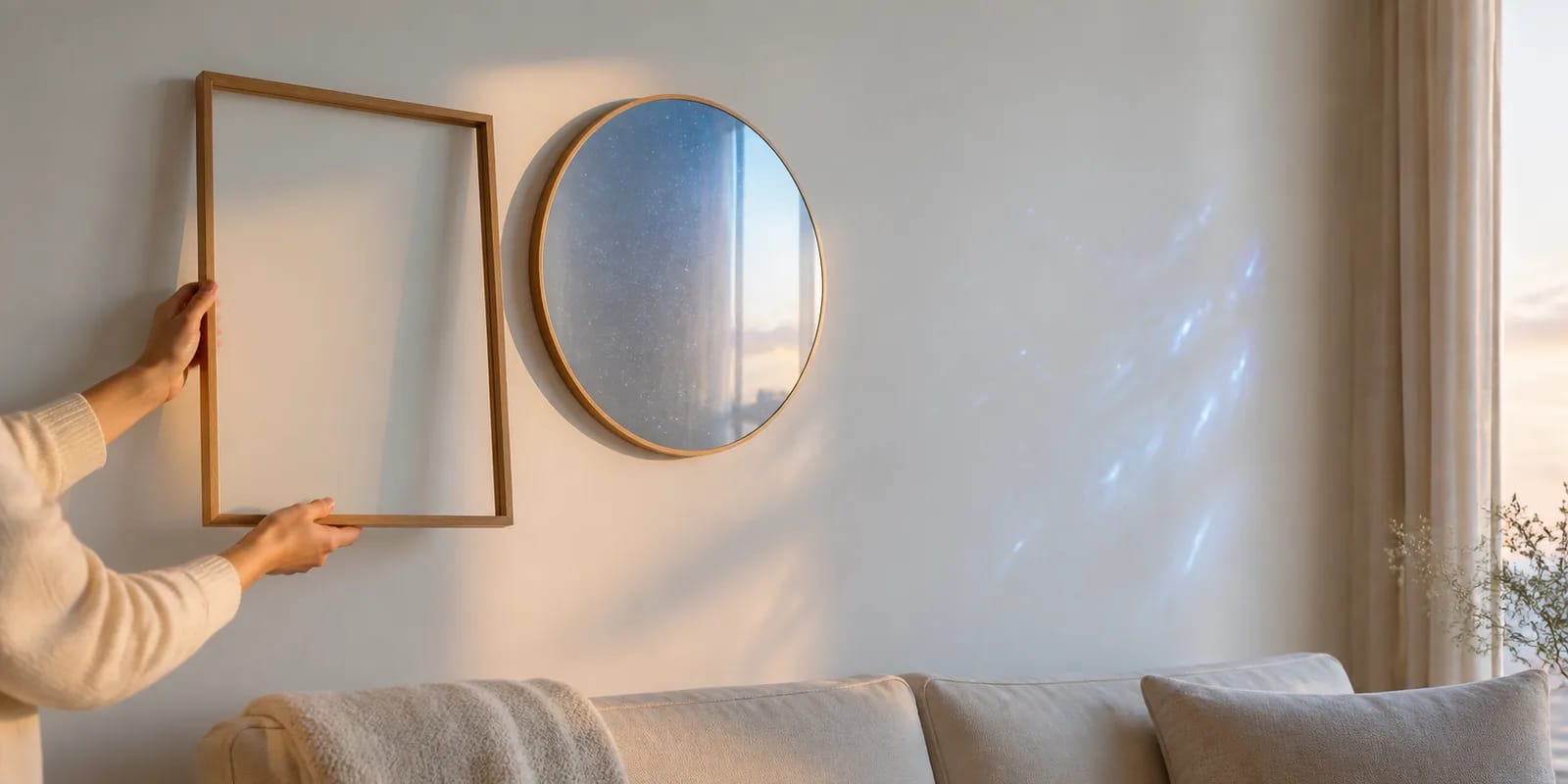
The center of the frame should be at eye level — roughly 145-150 cm (57-60 inches) from the floor. This is the gallery standard and ensures comfortable viewing.
Above Furniture
When hanging above a sofa, console, or bed, leave 15-20 cm (6-8 inches) between the top of the furniture and the bottom of the frame. The frame should feel connected to the furniture below, not floating too high.
Grouping
Star maps look beautiful as part of a gallery wall. Pair them with other personal items — wedding photos, prints from meaningful places, or typographic quotes. Keep spacing consistent at 5-8 cm (2-3 inches) between frames.
Hardware
- For lightweight frames: adhesive strips or small nails
- For medium frames: picture hooks with nails
- For heavy frames: wall anchors or toggle bolts
- Always check your wall type (drywall, plaster, brick) and use appropriate hardware
Common Mistakes to Avoid
- Choosing a frame that is too ornate — Let the star map be the focal point, not the frame
- Skipping the mat on small prints — Small prints need the visual breathing room a mat provides
- Hanging too high — The most common hanging mistake. Lower than you think is usually right
- Ignoring UV protection in sunny spots — Your print will fade noticeably within a year without UV glass
- Using tape instead of proper mounting — Tape yellows and damages prints over time
Start With Your Star Map
Before you can frame it, you need to create it. Design your personalized star map with 8,900+ real stars, choose your moment and inscription, and decide on your format.
Create your star map now — then come back here when it is time to frame it.
Ready to capture your special moment?
Create a personalized star map in minutes.
Design my Star Map — from 12,00 €