Why Spain Is Europe's Stargazing Capital
Spain holds a remarkable distinction in the world of astronomy tourism: with over 60 Starlight-certified destinations and 17 official Starlight Reserves, it leads the planet in protected dark sky sites. No other European country comes close.
The reasons are geographic and climatic. Spain sits between 28 and 43 degrees north latitude, a range that exposes observers to a broad sweep of the celestial sphere. Many inland regions enjoy over 300 clear nights per year. Vast stretches of sparsely populated terrain — from the mesetas of Castile to the volcanic highlands of the Canaries — provide naturally dark skies that have largely vanished elsewhere in Western Europe.
The Starlight Foundation, headquartered in Tenerife and supported by UNESCO, the Instituto de Astrofisica de Canarias (IAC), and the World Tourism Organization, has certified these territories since 2009, recognizing their commitment to preserving the night sky.
Top Starlight Reserves
La Palma (Canary Islands) — The World's First Starlight Reserve
La Palma earned the title of the world's first Starlight Reserve in 2012. At 2,426 meters above sea level, the Roque de los Muchachos Observatory houses the Gran Telescopio Canarias (GTC) — with its 10.4-meter primary mirror, it is the largest optical telescope on Earth. The island has been protected by Spain's Ley del Cielo (Sky Law) since 1988, the world's first legislation enacted to protect astronomical sky quality.
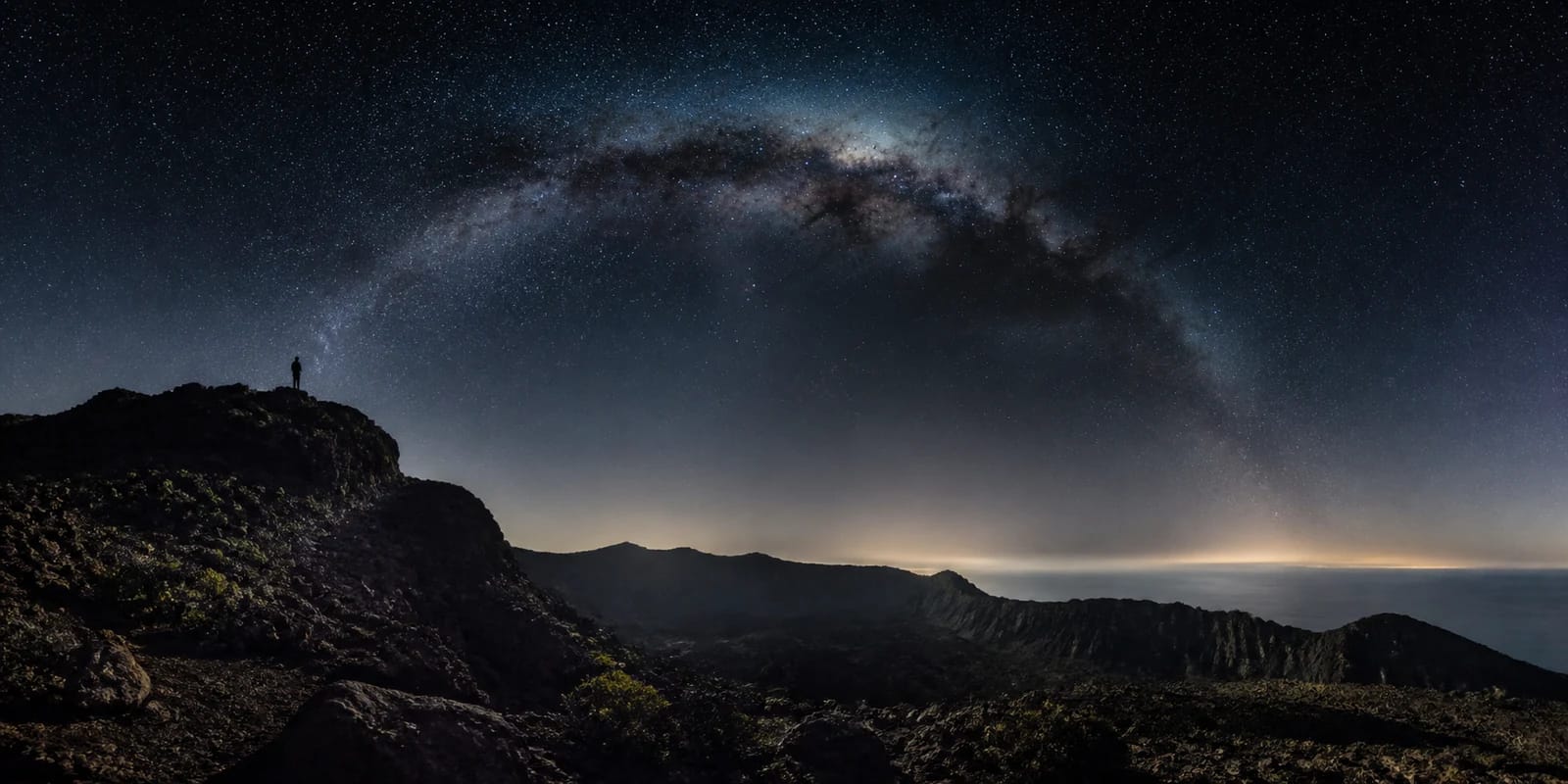
What makes it special: La Palma sits above the cloud layer (the so-called "sea of clouds"), guaranteeing exceptional atmospheric transparency. Light pollution is virtually nonexistent thanks to strict public lighting regulations. On a clear night, over 6,000 stars are visible to the naked eye.
Coordinates: 28.76 N, 17.89 W — Altitude: 2,426 m
What to observe: The Milky Way with extraordinary clarity, nebulae including Orion and the Lagoon Nebula, globular clusters, the Andromeda Galaxy, and in winter, the full splendor of the Orion constellation.
Sierra Morena (Andalusia) — The World's Largest Starlight Tourist Destination
Sierra Morena holds the record as the largest Starlight tourist destination on the planet, stretching over 400 kilometers across four Andalusian provinces: Jaen, Cordoba, Seville, and Huelva. This mountain range, with sparse population and moderate elevations (500 to 1,300 meters), offers a natural darkness that is increasingly rare in Western Europe.
What makes it special: The sheer scale of the territory means you can find observation points with no light sources on the horizon in any direction. Numerous rural accommodations offer guided stargazing activities with professional astronomers.
Montsec (Catalonia) — Astronomy in the Pre-Pyrenees
The Sierra del Montsec in the province of Lleida combines an exceptional dark sky with first-class astronomical infrastructure. The Montsec Astronomy Park (PAM), at 1,570 meters altitude, features a planetarium, exhibition halls, public telescopes, and observation platforms with panoramic views of the Pyrenees.
What makes it special: One of the few Starlight destinations that integrates science education, tourism, and research in a single facility. The Canelles reservoir and the Mont-rebei gorge add a spectacular natural dimension to the experience.
Coordinates: 42.05 N, 0.88 E — Altitude: 1,570 m
Gudar-Javalambre (Teruel, Aragon) — Among Europe's Darkest Skies
The Gudar-Javalambre region in the province of Teruel hosts the Javalambre Astrophysical Observatory (OAJ) at 1,957 meters altitude on Pico del Buitre. Teruel is one of Spain's least populated provinces, resulting in minimal light pollution and sky darkness values that rival the best sites in the Northern Hemisphere.
Coordinates: 40.04 N, 1.02 W — Altitude: 1,957 m
What to observe: Skies with darkness values exceeding SQM 21.5 mag/arcsec2. Ideal for long-exposure astrophotography and deep-sky observation.
Tenerife (Canary Islands) — The World's Largest Solar Observatory
The Teide Observatory, operated by the IAC at 2,390 meters on the slopes of Mount Teide (3,718 m, a UNESCO World Heritage site), is the world's largest solar observatory and one of the most important astronomical complexes on the planet.
What makes it special: Observing the stars from the Teide National Park combines volcanic geology and astronomy in an unforgettable setting. The altitude places the observer above roughly 90% of Earth's atmosphere, significantly reducing turbulence and improving image quality. The Perseid meteor shower in August is unmatched from this location.
Coordinates: 28.30 N, 16.51 W — Altitude: 2,390 m
Sierra de Cazorla (Jaen) — Dark Skies in Spain's Largest Natural Park
The Sierras de Cazorla, Segura y Las Villas Natural Park covers 214,300 hectares — Spain's largest protected natural area and one of the biggest in Europe. Its Starlight certification recognizes skies of remarkable darkness, shielded by the surrounding mountain terrain.
What makes it special: The combination of wilderness, Iberian wildlife, and starry skies offers a fully immersive experience. Several lodges within the park organize nighttime excursions with astronomers.
More Notable Destinations
- Leza, Jubera, Cidacos, and Alhama Valleys (La Rioja) — Dark skies among vineyards
- Sierra Sur de Jaen — Olive groves under pristine skies
- Alpujarra (Granada) — White villages on the southern face of the Sierra Nevada
- La Mancha Conquense (Cuenca) — Flat plains offering unobstructed horizons in every direction
- Alto Turia (Valencia) — Protected skies within easy reach of the Mediterranean coast
- Trevinca-A Veiga (Orense, Galicia) — Northwestern mountains with surprisingly dark skies
Best Times for Stargazing in Spain
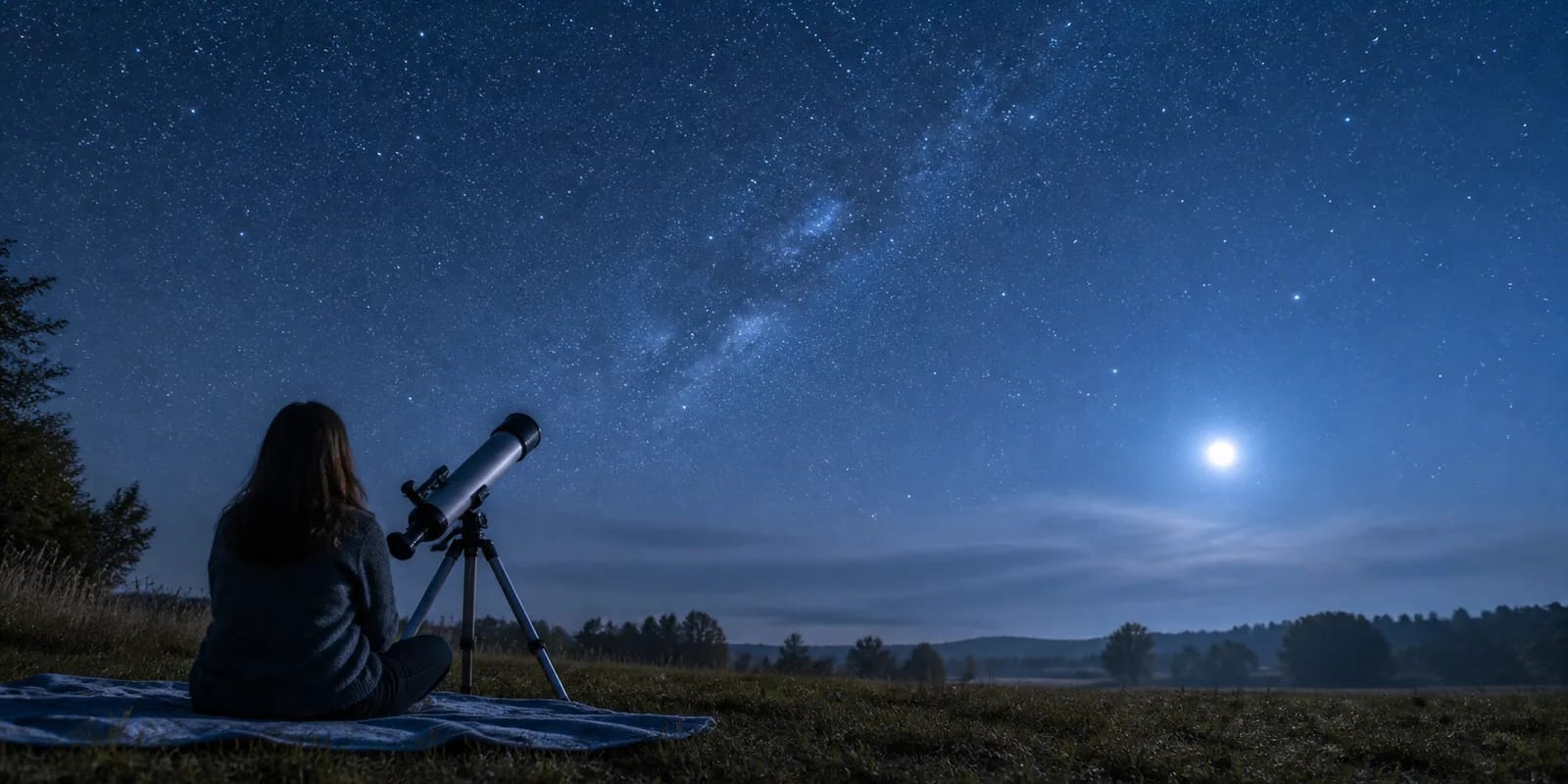
Summer (June-September): Warm nights, clear skies, and the Milky Way's galactic center at its highest elevation. The Perseid meteor shower peaks around August 12, with up to 100 meteors per hour under optimal conditions.
Winter (December-February): Longer nights with cold, dry air producing exceptionally transparent skies. Orion, Sirius (the brightest star in the night sky), the Pleiades, and Aldebaran dominate the winter firmament. The Geminid meteor shower in December is the most intense of the year.
Moon phases: Always plan around the new moon for the darkest possible sky.
Capture the Sky From Your Favorite Spanish Destination
Every night spent under Spanish stars is unique. The combination of location, date, and time makes each sky personal. You can use OwnStarMap’s design tool to create a commemorative map around one of these places and a meaningful moment.
The result is wall art rather than an observatory instrument. Before ordering, read the public method and limits, then check the live configuration and checkout information for the available options.
Imagine a map for the sky above Roque de los Muchachos on a birthday, or over Teide on a wedding anniversary. The interactive tool lets you explore the design before deciding whether it suits the occasion.
Practical Tips
- Warm clothing — Even in summer, mountain nights easily drop below 10 degrees Celsius
- Red light torch — Preserves your night vision (avoid white flashlights)
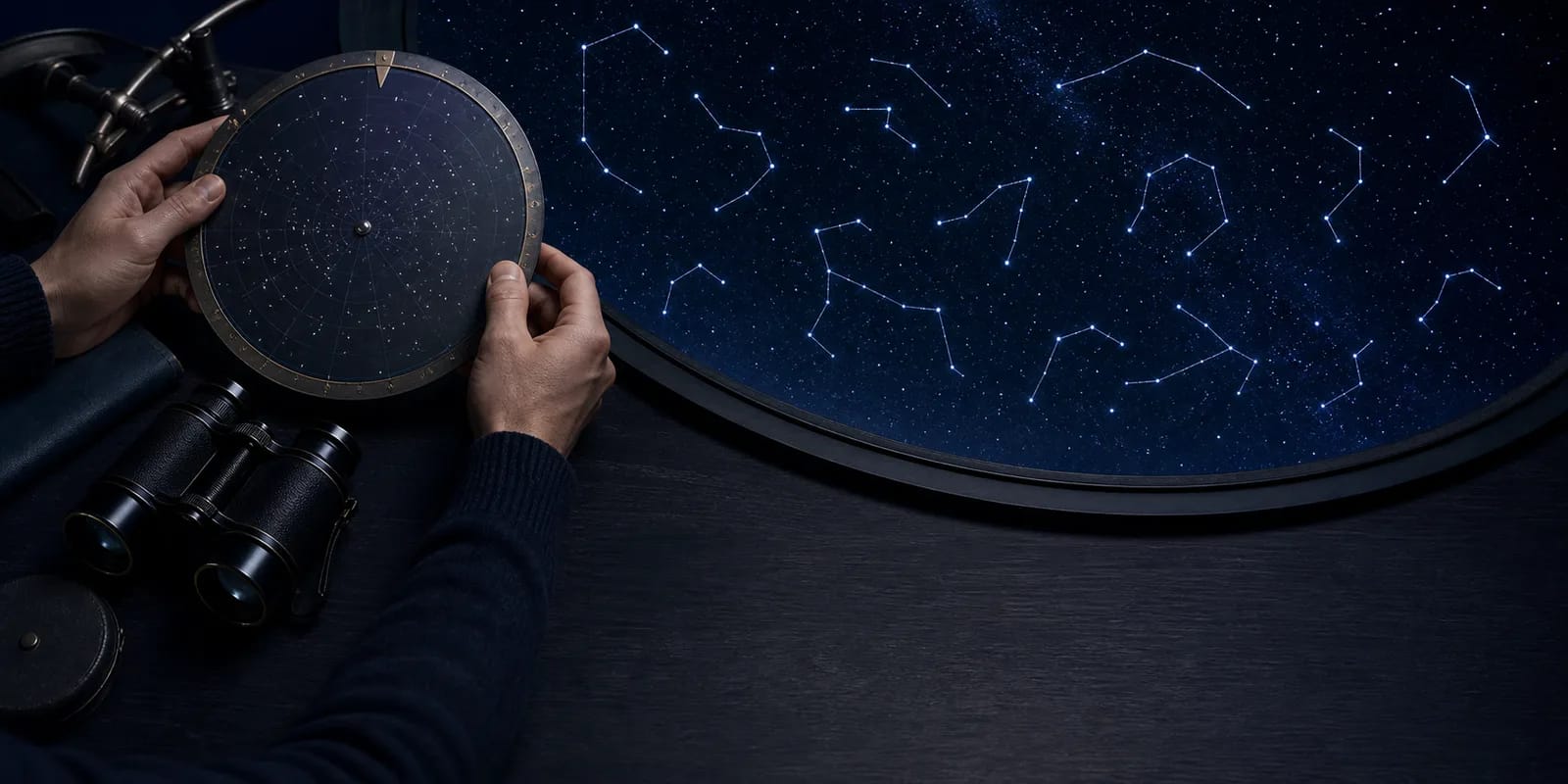
- Astronomy app — Stellarium (free) turns your phone into a digital planisphere
- 10x50 binoculars — A modest investment that transforms the experience
- Guided tours — Many Starlight destinations offer outings with professional astronomers (15-40 EUR per person)
- Astrophotography — Use a tripod, wide-angle lens (14-24 mm), ISO 3200-6400, f/2.8, 15-25 second exposures
Whether you have visited these remarkable places or dream of going, a personalized star map captures the exact sky you would see from any of these locations on any date you choose.
Create your Spanish star map — pick your favorite destination, your date, and take the stars of the Iberian Peninsula home with you.
Ready to capture your special moment?
Create a personalized star map in minutes.
Design my Star Map — from 12,00 €