Why the USA Is a Stargazing Wonderland
The United States holds a distinction unmatched by any other nation on Earth: with over 130 International Dark Sky Places — parks, reserves, sanctuaries, and communities — it leads the world by a wide margin. No other country has invested as heavily in protecting its night skies, and no other country offers such a diversity of landscapes from which to observe them.
The reasons are both geographic and cultural. The American West alone contains millions of acres of sparsely populated terrain: high deserts, alpine plateaus, volcanic highlands, and canyon country where the nearest city lights sit hundreds of miles away. National parks, national monuments, and state parks preserve these landscapes, and many have partnered with DarkSky International (formerly the International Dark-Sky Association, or IDA) to earn formal certification as dark sky sites.
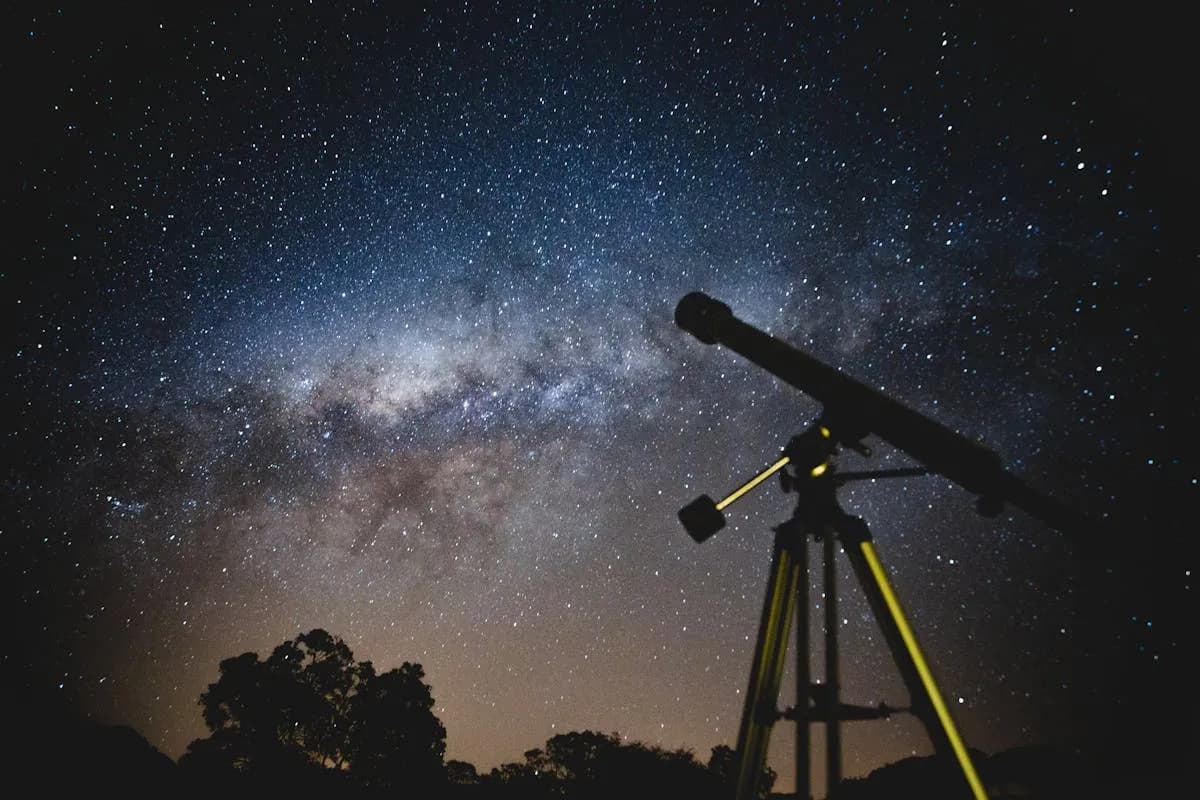
The result is a network of world-class stargazing destinations stretching from the pine forests of Pennsylvania to the summit of Mauna Kea in Hawaii, from the shores of Lake Michigan to the desert floor of Death Valley. Whether you are chasing the summer Milky Way, photographing a meteor shower, or simply want to see the night sky the way our ancestors did — with thousands of stars blazing overhead — the United States has a dark sky park for you.
Top Dark Sky Parks and Reserves
Cherry Springs State Park (Pennsylvania) — The East Coast's Darkest Sky
Tucked into the Susquehannock State Forest in rural north-central Pennsylvania, Cherry Springs is one of the darkest places east of the Mississippi. Designated a Gold-tier International Dark Sky Park, it sits at 2,300 feet elevation on a mountaintop plateau, surrounded by 262,000 acres of forest that shield it from the light domes of distant cities.
What makes it special: Cherry Springs is the rare eastern location that consistently reaches Bortle 2 darkness. A dedicated astronomy observation field covers 9 acres, and park regulations prohibit white light after dark. The nearest significant light source is over 60 miles away. For stargazers in the northeastern United States, this is the destination.
Coordinates: 41.66 N, 77.82 W — Elevation: 2,300 ft (700 m)
What to observe: The Milky Way casts visible shadows on the darkest nights. Deep-sky objects like the Andromeda Galaxy, the Orion Nebula, and the Double Cluster in Perseus are visible to the naked eye. During summer, the galactic core stands tall above the southern horizon.
Big Bend National Park (Texas) — The Darkest National Park in the Lower 48
Big Bend occupies 801,163 acres of Chihuahuan Desert along the Rio Grande in southwest Texas. It holds the distinction of being the least light-polluted national park in the contiguous United States, with Bortle 1-2 skies across much of its territory. The nearest town of any size, Alpine, sits 100 miles to the north.
What makes it special: The combination of extreme remoteness, low humidity, and high desert elevation (1,800 to 7,800 feet) produces skies of exceptional clarity and darkness. On a moonless night, over 2,000 stars are visible to the unaided eye in a single glance — and with full dark adaptation, the count climbs far higher. The park hosts regular star parties and ranger-led astronomy programs.
Coordinates: 29.25 N, 103.25 W — Elevation: 1,800-7,800 ft (550-2,380 m)
What to observe: The zodiacal light is routinely visible in spring and autumn. The Milky Way stretches from horizon to horizon in summer. Mercury, normally elusive, is easy to spot from this latitude during favorable elongations. The Sagittarius star cloud and the Lagoon Nebula are stunning in binoculars.
Mauna Kea (Hawaii) — One of the World's Premier Observatory Sites
Rising 13,796 feet above the Pacific Ocean, the summit of Mauna Kea on Hawaii's Big Island is one of the finest astronomical observing sites on the planet. Thirteen world-class telescopes sit atop the mountain, including the twin 10-meter Keck telescopes and Japan's 8.2-meter Subaru Telescope.
What makes it special: At nearly 14,000 feet, observers stand above roughly 40% of Earth's atmosphere and 90% of its water vapor. The result is extraordinary atmospheric transparency and minimal turbulence. The summit is above the tropical inversion layer, meaning cloud cover stays far below. The Mauna Kea Visitor Information Station at 9,200 feet offers free public stargazing programs several evenings per week.
Coordinates: 19.82 N, 155.47 W — Elevation: 13,796 ft (4,205 m)
What to observe: From this latitude, observers can see both northern and southern sky objects in the same night — a rare advantage. The Southern Cross grazes the horizon in winter. Star clusters, nebulae, and galaxies appear with a sharpness that is simply unavailable at lower elevations. The seeing conditions (atmospheric steadiness) are among the best measured anywhere on Earth.
Death Valley National Park (California) — The Largest Dark Sky National Park
Death Valley holds two superlatives that matter to stargazers: it is the largest national park in the lower 48 states (3.4 million acres) and one of the driest places in North America. DarkSky International designated it a Gold-tier International Dark Sky Park, recognizing skies that benefit from extreme aridity, low population density, and vast distance from major cities.
What makes it special: Humidity is the enemy of astronomical observation — water vapor scatters light and reduces contrast. Death Valley's average annual rainfall of 2.36 inches means the air is almost always bone-dry, producing exceptional transparency. The park's enormous size creates a buffer from the light dome of Las Vegas, 120 miles to the east. Zabriskie Point, Dante's View, and Mesquite Flat offer iconic foregrounds for astrophotography.
Coordinates: 36.46 N, 116.87 W — Elevation: -282 to 11,049 ft (-86 to 3,368 m)
What to observe: The winter Milky Way, Orion rising over badlands formations, and the zodiacal light in spring. Venus and Jupiter blaze above the desert horizon during favorable apparitions. The Gegenschein (counter-glow) — a faint brightening of the sky exactly opposite the Sun — is visible from here on the darkest nights.
Bryce Canyon National Park (Utah) — Astronomy at 8,000 Feet
Bryce Canyon sits on the edge of the Paunsaugunt Plateau in southern Utah, at elevations between 7,000 and 9,000 feet. The park has hosted an annual astronomy festival since 2001, drawing thousands of visitors who come to observe the night sky framed by the park's famous hoodoo formations.
What makes it special: On a moonless night, over 7,500 stars are visible to the naked eye from Bryce Canyon — compared to roughly 500 from a typical suburban backyard and fewer than 25 from a major city center. The high elevation, dry air, and distance from any significant light source combine to produce Bortle 2-3 skies. The park's ranger-led astronomy programs are among the best in the National Park System.
Coordinates: 37.63 N, 112.17 W — Elevation: 7,000-9,000 ft (2,130-2,740 m)
What to observe: The summer Milky Way arching over hoodoo formations is one of the most photographed night sky scenes in America. The Andromeda Galaxy is visible as a fuzzy patch to the naked eye, and binoculars reveal its elliptical shape. Star clusters like the Pleiades and the Beehive Cluster are spectacular.
Great Basin National Park (Nevada) — Among the Darkest Skies in the Nation
Great Basin National Park, in the remote eastern edge of Nevada near the Utah border, is one of the most isolated parks in the lower 48. Wheeler Peak rises to 13,063 feet, and the park's location — far from any metropolitan area — produces some of the darkest skies measured in the contiguous United States.
What makes it special: The park was designated an International Dark Sky Park in 2016. Light pollution measurements consistently show Bortle 1-2 conditions. The park hosts an annual Astronomy Festival and offers regular telescope viewing programs. The combination of high elevation, dry air, and extreme remoteness is hard to match anywhere in the country.
Coordinates: 38.98 N, 114.30 W — Elevation: 6,200-13,063 ft (1,890-3,982 m)
What to observe: The zodiacal light, the Gegenschein, and the Milky Way's full structure from Scutum to Cassiopeia. On the darkest nights, observers report seeing the faint glow of the Milky Way's satellite galaxies — the Large and Small Magellanic Clouds — just above the southern horizon.
Natural Bridges National Monument (Utah) — The First International Dark Sky Park
Natural Bridges holds a place of honor in dark sky history: in 2007, it became the very first International Dark Sky Park ever designated. Located in the canyon country of southeastern Utah, this small monument (7,636 acres) preserves three natural stone bridges and some of the darkest skies on the Colorado Plateau.
What makes it special: The designation that started it all. Natural Bridges demonstrated that protecting dark skies was both achievable and valuable, inspiring hundreds of subsequent designations worldwide. Night sky quality here regularly reaches Bortle 2, with the Milky Way bright enough to cast shadows.
Coordinates: 37.60 N, 110.01 W — Elevation: 6,500 ft (1,980 m)
Headlands International Dark Sky Park (Michigan) — The Midwest's Premier Dark Sky
Located at the tip of Michigan's Lower Peninsula near Mackinaw City, Headlands is the finest dedicated dark sky park in the Midwest. Perched on the shores of Lake Michigan, it offers unobstructed northern horizons — making it one of the best locations in the lower 48 for viewing the aurora borealis when solar activity is high.
What makes it special: Headlands was designated a Gold-tier International Dark Sky Park. The park's 600 acres include a modern observatory with a 20-inch research-grade telescope open to the public. Looking north across Lake Michigan, there are no light sources for hundreds of miles. The park is within easy driving distance of Detroit, Chicago, and other major Midwestern cities.
Coordinates: 45.77 N, 84.76 W — Elevation: 600 ft (183 m)
What to observe: The northern lights during geomagnetic storms. The Milky Way rising over Lake Michigan. Circumpolar constellations — Ursa Major, Cassiopeia, Cepheus — that never set at this latitude.
Honorable Mentions
- Glacier National Park (Montana) — Million-acre wilderness with pristine skies and dramatic mountain foregrounds
- Joshua Tree National Park (California) — Desert darkness just two hours from Los Angeles, popular with astrophotographers
- Acadia National Park (Maine) — The first national park east of the Mississippi to earn a dark sky designation, with views over the Atlantic
- Voyageurs National Park (Minnesota) — Boreal forest and lake country near the Canadian border, with some of the darkest skies in the upper Midwest
- Cosmic Campground (New Mexico) — The first International Dark Sky Sanctuary in the Northern Hemisphere, tucked into the Gila National Forest with Bortle 1 skies
Best Times to Stargaze in the USA
Summer (June-September): The Milky Way's galactic center is highest in the sky and most visible from dark locations. Warm nights at lower elevations (bring layers for mountain parks). The Perseid meteor shower peaks around August 11-13, with 50 to 100 meteors per hour under dark skies.
Autumn (September-November): The summer Milky Way transitions lower in the west, replaced by Andromeda, Pegasus, and the rich star fields of Cygnus overhead. Cooler temperatures bring drier, steadier air in many regions.
Winter (December-February): The winter sky offers Orion, Sirius (the brightest star in the night sky), the Pleiades, Aldebaran, and the bright stars of Gemini and Canis Major. The Geminid meteor shower in mid-December is the most prolific annual shower, with up to 120 meteors per hour. Cold, dry air produces the most transparent skies of the year, though you will need serious cold-weather gear at mountain parks.
Spring (March-May): Galaxy season. The Virgo Cluster, containing thousands of galaxies, is well placed for observation. The zodiacal light — a faint pyramid of light along the ecliptic — is best seen in the west after sunset in spring.
Moon phases: Always plan your trip around the new moon. Even a half moon washes out the Milky Way and fainter deep-sky objects.
Capture the Sky From Your Favorite Dark Sky Park
Every night spent under American stars is unique. The precise combination of location, date, and time produces a sky that will never repeat in exactly the same way. With OwnStarMap, you can create a personalized star map showing all 8,921 stars visible to the human eye from any of these locations, on any date you choose.
Our maps use the same HYG star catalog data employed by professional observatories, with all 88 IAU constellations rendered with scientific accuracy. Imagine a star map showing the sky above Mauna Kea on your honeymoon, the stars over Big Bend on the night your child was born, or the Milky Way arching over Bryce Canyon on your birthday.
Starting at just ~$13 (12 EUR), you can design your own star map with our interactive tool, choosing from 8 themes, 9 fonts, and 3 shapes.
Practical Tips for Dark Sky Trips
- Warm clothing — Even in summer, mountain parks regularly drop below 40 F (5 C) at night. Desert parks can swing 50 degrees between day and night
- Red light headlamp — Preserves your night vision (your eyes need 20-30 minutes to fully dark-adapt; one flash of white light resets the clock)
- Astronomy apps — Stellarium (free, all platforms) and Sky Guide (iOS) turn your phone into a real-time planisphere. Use night mode (red screen) to protect your dark adaptation
- 10x50 binoculars — A modest investment that transforms the experience. Resolve star clusters, trace the Milky Way's dust lanes, and spot galaxies invisible to the naked eye
- Best time of night — Astronomical twilight ends roughly 90 minutes after sunset. The hours between then and moonrise (or all night during new moon) are prime observing time
- Check conditions — cleardarksky.com and the Clear Outside app provide cloud cover, transparency, and seeing forecasts specifically for astronomers
- Campground reservations — Popular dark sky parks fill up months in advance during peak season (summer, meteor shower weekends, astronomy festivals). Book early
Whether you have stood beneath the stars at one of these remarkable places or dream of making the pilgrimage, a personalized star map captures the exact sky you would see from any location on any date you choose.
Create your star map — pick your favorite dark sky park, your date, and take the stars of America home with you.
Ready to capture your special moment?
Create a personalized star map in minutes.
Design my Star Map — from ~$13.83