What is a pedida de mano?
In English-speaking cultures, the path to marriage is usually straightforward: one partner proposes, the other says yes, and wedding planning begins. But in Spain, there is a deeply rooted tradition that sits between the proposal and the wedding -- the pedida de mano.
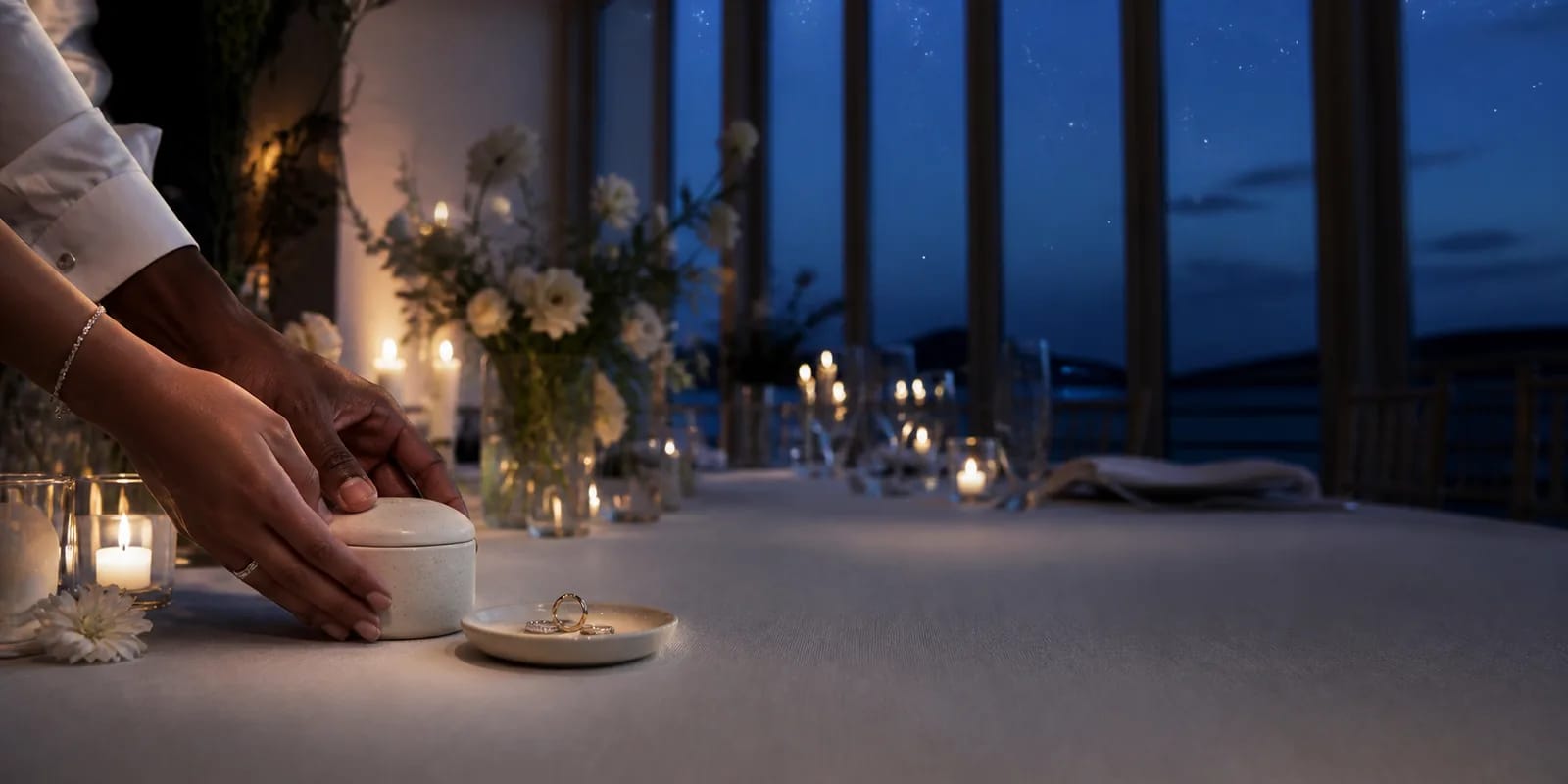
The pedida de mano (literally "asking for the hand") is a formal family ceremony where the groom's family visits the bride's family home to officially ask for their blessing. The couple has already decided to marry -- this is not the proposal. This is the moment when that private decision becomes a family affair. Two sets of parents, sometimes grandparents and siblings, sit down together for a carefully prepared meal, and the groom formally asks the bride's father for permission to marry his daughter.
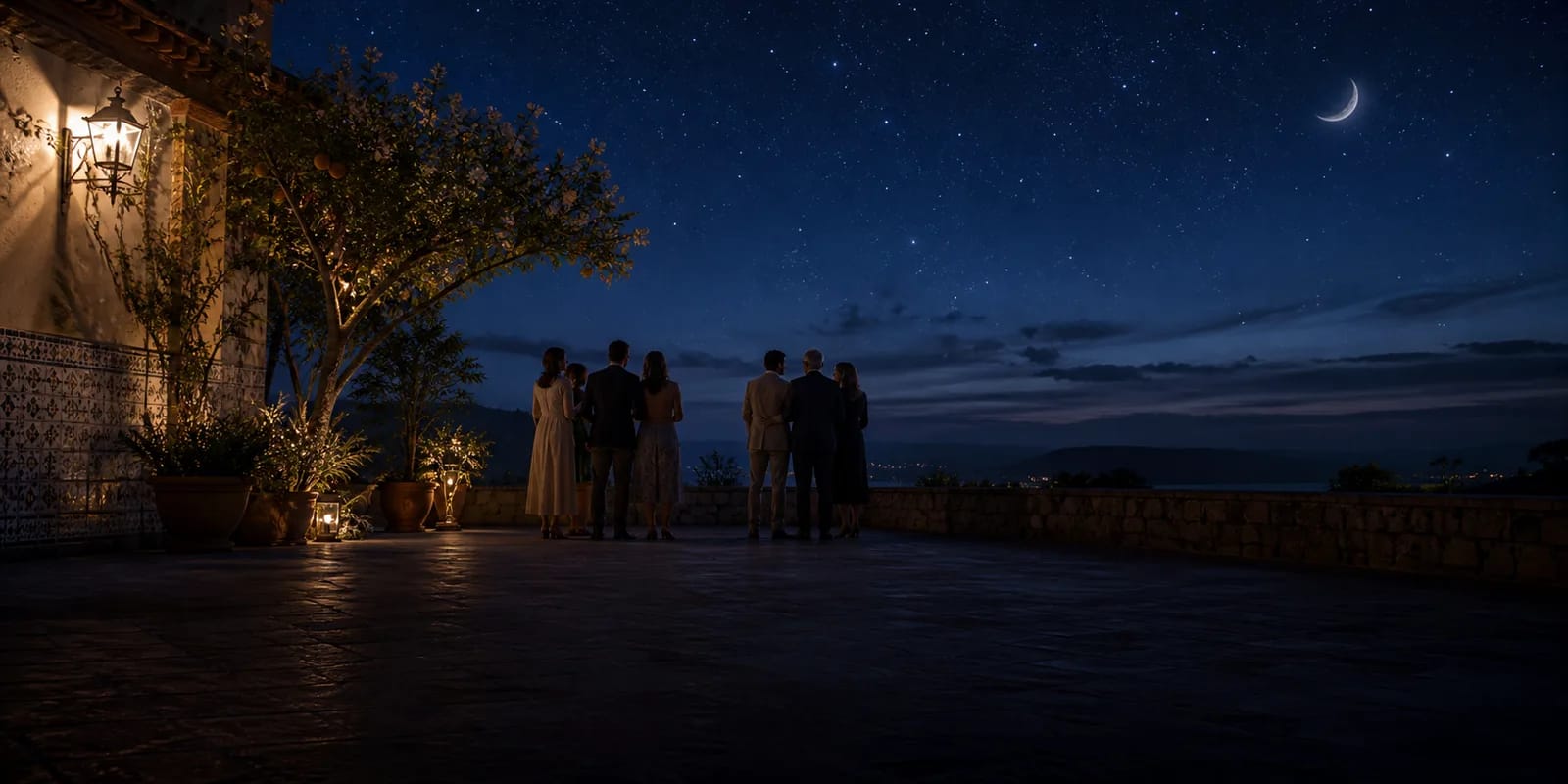
It is solemn, emotional, and profoundly familial. Mothers often cry. Fathers struggle to find the right words. Grandparents share wisdom earned over decades of marriage. And above this gathering, the stars form a pattern that will never repeat in exactly the same way.
How the pedida differs from a proposal
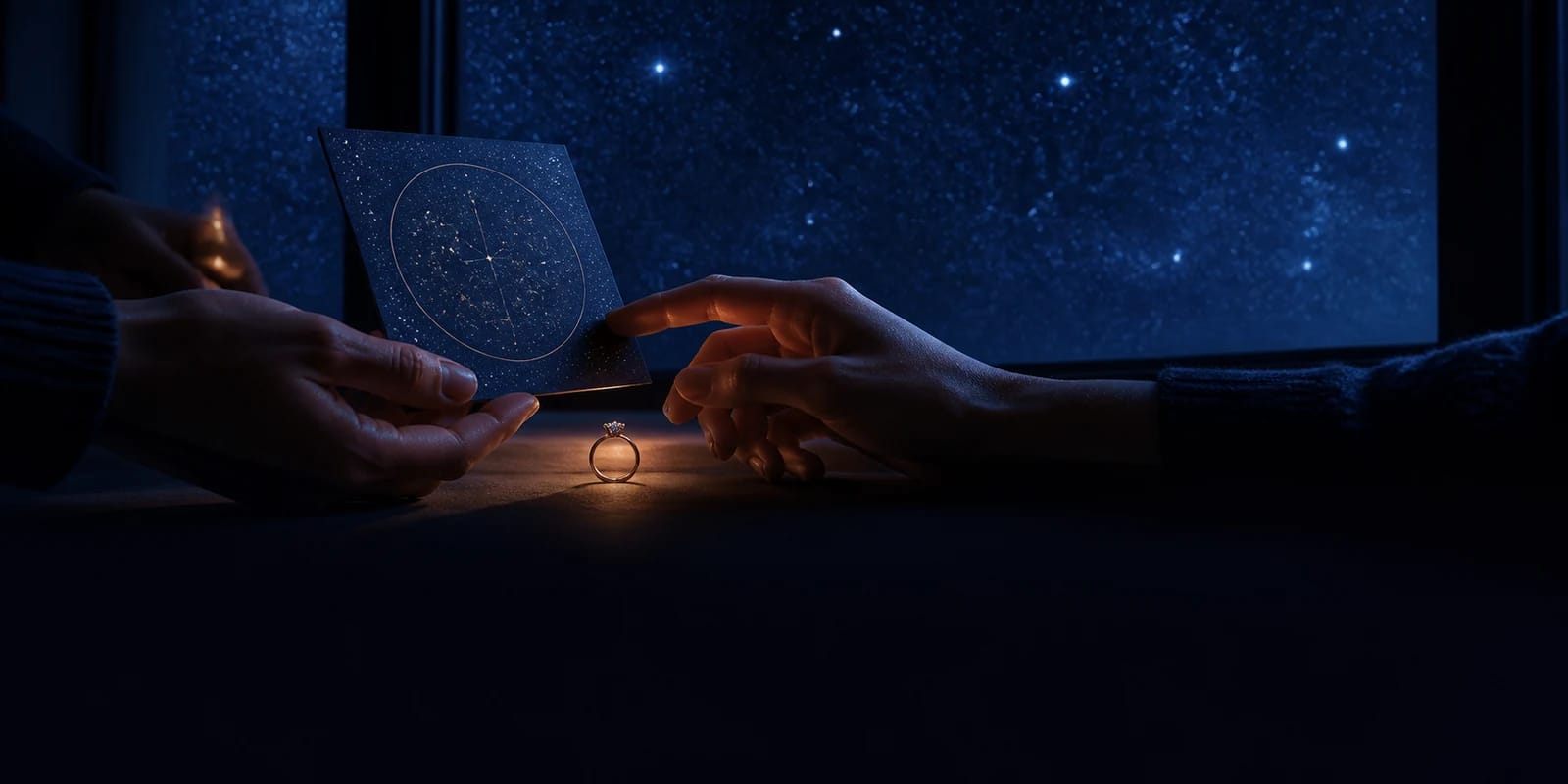
This distinction matters, especially when choosing a star map date. The engagement star map captures the romantic night when one person asked another to share their life. The pedida de mano star map captures something entirely different: the night when two families chose to become one.
The proposal is intimate, often surprising, centered on the couple. The pedida is expected, planned, centered on the families. The proposal happens in a restaurant, on a mountaintop, at a special spot. The pedida happens at the bride's family home, around a dinner table set with the best china.
Different nights. Different meanings. Different star maps.
How a pedida de mano unfolds
The groom's parents (and sometimes grandparents) arrive at the bride's family home. The bride's mother has prepared an elaborate meal -- this is a point of pride and tradition. The families share food and conversation, often nervous at first, gradually warming.
At the right moment, the groom addresses the bride's father directly. In some regions, the groom's father speaks instead. The words are formal but heartfelt: he asks for the family's blessing and permission to marry their daughter. The father responds -- sometimes with rehearsed words, sometimes with tears, often both. The families embrace. A toast is raised. The evening continues with stories, laughter, and the quiet satisfaction that something important has been sealed.
Regional traditions across Spain
The pedida de mano takes on different flavors depending on the region:
Andalusia brings festivity to the solemnity. The table features jamon iberico, Manchego cheese, and sherry from Jerez. The groom often brings a symbolic gift for the bride's mother -- flowers or artisanal sweets. The evening might end with someone humming a traditional copla.
Galicia keeps things intimate and rural. Families gather in stone farmhouses over empanada gallega, octopus, and tarta de Santiago. Grandparents play a particularly prominent role, sharing stories from their own marriages.
Castilla maintains the most ceremonial character. Roast lamb or suckling pig anchors the meal, with Ribera del Duero wine for the toast. In some Castilian families, the bride's father presents the groom with a symbolic object -- an old house key, a coin, or a family heirloom -- as a sign of acceptance.
Catalonia has modernized the tradition but not abandoned it. Many Catalan families hold the pedida at a restaurant instead of at home, with pa amb tomaquet (bread with tomato) always present.
Basque Country combines formality with Basque warmth. Txistorra sausage, bacalao al pil-pil, and cider fill the table. Basque families value directness -- the groom speaks plainly, and the answer comes with few but firm words.
Why a star map of the pedida matters
Most wedding-related gifts focus on the couple. But the pedida de mano is a family moment above all else. A star map of that evening is a gift that touches everyone who was at that table.
From the groom to the bride's family
Traditionally, the groom brings a symbolic gift to his future in-laws. A star map of the pedida night, elegantly framed, is a present that will move them deeply. It says: "This night mattered. This sky witnessed our families becoming one."
From the bride's parents to the couple
Some parents want to give the couple something meaningful after the pedida. A star map centered on their family home -- the place where everything became official -- is a profoundly emotional keepsake.
From the grandparents
For grandparents who attended the pedida, a star map is a way to leave their mark on the couple's story. The sky of the night they gave their blessing, inscribed with a message in their own words, becomes a family heirloom.
Choosing the right date
The date is the heart of any star map. For a pedida de mano, these are the most meaningful options:
- The pedida dinner night -- The most significant choice. Build the map around the family home on the night the families united, and use the public method page to understand what the visual rendering represents.
- The night the families first met -- Some couples have a story that predates the pedida. The first casual dinner where both sets of parents came together.
- The night the groom first visited the family home -- A quieter but deeply personal date that marks the beginning of the relationship between the groom and his future in-laws.
Message ideas for a pedida star map
The message should reflect the familial nature of this moment -- not romantic, but warm, respectful, and generational:
- "The stars the night our families became one"
- "Under this sky, two families united"
- "The night you gave us your blessing"
- "[City] -- [Date] -- The night of the pedida de mano"
- "For our parents -- the sky above the evening everything began"
- "Welcome to our family -- [Date]"
For more inspiration, see our guide on what to write on a star map.
Design suggestions
A pedida star map calls for warm, traditional tones that reflect the solemnity and hospitality of the occasion:
- Burgundy and gold -- A deep burgundy background with golden constellation lines evokes tradition, warmth, and the hearth. Perfect for gifting to parents.
- Cream and antique gold -- Elegant and luminous, this design conveys dignity without heaviness. Ideal as a family gift.
- Midnight blue and silver -- For a more contemporary feel that still honors the gravity of the occasion.
The location should almost always be the bride's family home. That address carries the story: the place where the groom was received, where the words were spoken, where the union was sealed.
A keepsake that connects generations
The pedida de mano is one of the few living traditions that directly connects three generations: grandparents, parents, and the couple. A star map of that evening becomes an object that transcends the moment.
Each map is a commemorative design based on the date, time, and place you enter. It should not be presented as a complete astronomical instrument; the public method page documents its scope and limits. Check the current checkout details before choosing a format.
Whether you are part of a Spanish family, marrying into one, or simply drawn to this beautiful tradition, a star map of the pedida de mano is a gift that speaks to the heart of the entire family.
Create your pedida de mano star map and give your family a memory that will shine forever.
Ready to capture your special moment?
Create a personalized star map in minutes.
Design my Star Map — from 12,00 €