Tonight's Sky Is a Unique Show
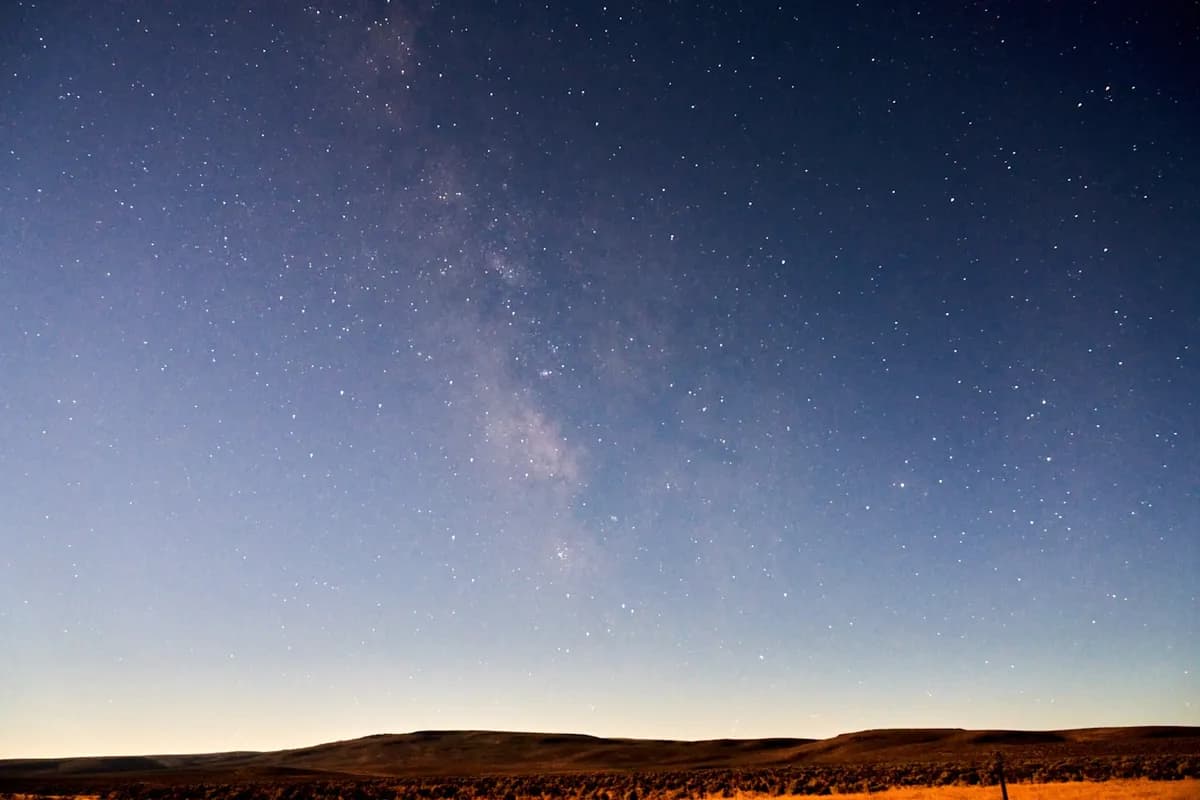
Right now, as you read this, the sky above your city is putting on a performance that will not be repeated tomorrow. The constellations are slowly wheeling westward, planets are drifting through the zodiac at their own unhurried pace, and the Moon is at a specific phase that changes its brightness and position every single night.
The night sky is not static wallpaper. It is a living, rotating, evolving display, and tonight's version of it is yours to watch.
Whether you are a complete beginner or a seasoned observer, there is always something worth looking up for. The trick is knowing where to point your eyes.
Planets Visible Right Now
Planets are often the first celestial objects people notice, even before they can name a single constellation. They are bright, they do not twinkle the way stars do (because they are close enough to appear as tiny discs rather than points), and they move against the background stars from week to week.
How to Tell a Planet from a Star
Stars twinkle. Planets usually do not. Stars are point sources of light whose rays are easily bent by atmospheric turbulence. Planets, being much closer, present a slightly wider disc that smooths out the twinkling. If you see a very bright "star" shining with a steady, unwavering light, it is almost certainly a planet.
The Bright Ones
Venus is impossible to miss when it is visible — the third brightest object in the sky after the Sun and Moon, reaching magnitude -4.6. It appears in the western sky after sunset or the eastern sky before sunrise, never straying far from the Sun.
Jupiter is a steady cream-colored beacon that outshines every star when it is up. It can appear almost anywhere along the ecliptic — the imaginary line the Sun traces across the sky.
Mars gives itself away with its distinct reddish-orange hue, caused by iron oxide on its surface. Its brightness varies enormously — near opposition it can rival Jupiter; at its farthest, it fades to a modest dot.
Saturn is dimmer but recognizable by its steady, yellowish glow. Even a small pair of binoculars reveals the rings — one of the most thrilling sights available to a casual observer.
Mercury is the trickiest to spot, never straying more than 28 degrees from the Sun. It only appears briefly in the twilight glow just after sunset or just before sunrise.
Constellations to Spot by Season
The constellations visible tonight depend on two things: your latitude and the time of year. Here is a guide for mid-northern latitudes (roughly 35 to 55 degrees north, covering most of Europe and North America). If you are in the Southern Hemisphere, the seasons are reversed and some constellations are replaced entirely.
Spring (March to May)
The spring sky is elegant and understated. Leo is the centerpiece, a distinctive pattern anchored by the bright star Regulus. To find it, look for a backwards question mark (called the Sickle) in the southern sky. East of Leo, Virgo stretches across a large area with Spica as its only bright star. High overhead, follow the arc of the Big Dipper's handle to "arc to Arcturus" — the brilliant orange star in Bootes, the fourth brightest in the sky.
Spring is also galaxy season. The Virgo Cluster, over a thousand galaxies roughly 54 million light-years away, lies in this region. You need a telescope to see them, but knowing they are there adds a dimension to the view.
Summer (June to August)
Summer is the most rewarding season for casual stargazers. Three bright stars form the Summer Triangle: Vega in Lyra, Deneb in Cygnus, and Altair in Aquila. This asterism is visible nearly all night and serves as a reliable anchor.
Low in the south, Scorpius is unmistakable — a curving chain of stars with the red supergiant Antares at its heart. Next door, Sagittarius points toward the center of the Milky Way, which reaches its most spectacular appearance in summer.
Autumn (September to November)
The autumn sky is quieter but full of treasures. The Great Square of Pegasus is an easy-to-spot quadrilateral high in the south. From Pegasus, trace northeast to find the Andromeda Galaxy — the most distant object visible to the naked eye at 2.5 million light-years.
Cassiopeia, shaped like a W or M depending on its orientation, is circumpolar from northern latitudes and makes a useful pointer for finding other constellations.
Winter (December to February)
Winter is the crown jewel of stargazing. Orion dominates with his three belt stars — Alnitak, Alnilam, and Mintaka — among the most recognizable patterns in the sky. At his shoulder, Betelgeuse glows red; at his foot, Rigel burns blue-white.
Surrounding Orion: Sirius in Canis Major (the brightest star in the night sky), Procyon in Canis Minor, Aldebaran in Taurus, Capella in Auriga, and Castor and Pollux in Gemini. No other season packs so many first-magnitude stars into a single view.
How to Stargaze Without a Telescope
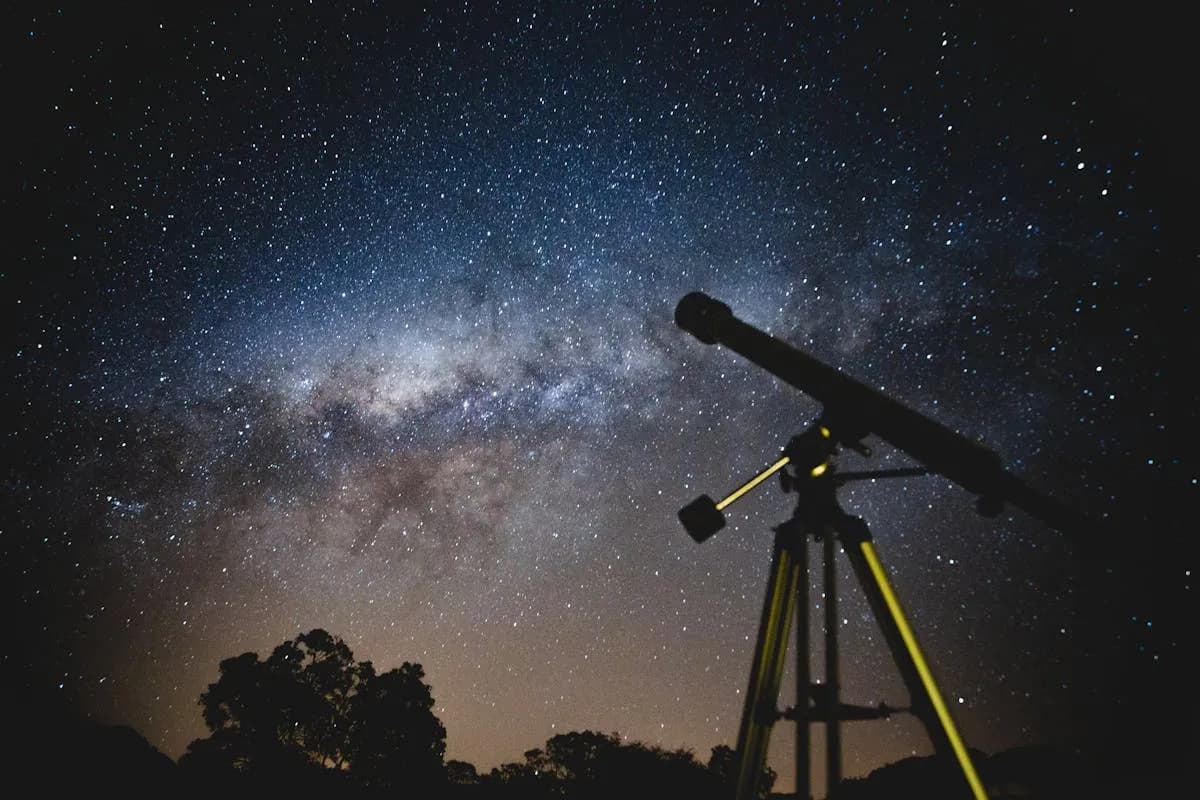
You do not need any equipment to enjoy the night sky. Some of the most memorable astronomical experiences require nothing more than a clear sky and a bit of patience.
Find Dark Skies
Light pollution is the single biggest obstacle. From a city center, you might see 20 or 30 stars. From a rural area an hour away, you can see thousands. If you cannot travel, even a park or rooftop away from direct streetlights will help.
Let Your Eyes Adapt
It takes about 20 to 30 minutes for your eyes to fully adapt to the dark. Avoid looking at your phone screen or any bright light during that time. If you need to check a star chart, use a red-filtered flashlight — red light does not reset your night vision.
Start with What You Know
Almost everyone can find the Big Dipper (or the Plough, as it is known in the UK). Follow the two pointer stars at the end of the bowl to Polaris, the North Star, which sits almost exactly at the north celestial pole. Once you have Polaris, you have a fixed reference point for the entire sky.
Use the Moon as a Guide
When the Moon passes near a bright star or planet, it acts as a natural pointer. These conjunctions happen regularly and are visible even from light-polluted cities. A thin crescent Moon near Venus at dusk is one of the most beautiful sights in the sky — no equipment required.
Be Patient
Give yourself at least 30 minutes outside. Your eyes will continue to adapt, fainter stars will emerge, and the slow drift of the sky will become perceptible. There is a meditative quality to watching the stars that no app or planetarium can replicate.
Capture Tonight's Sky
Every evening offers a sky that has never existed before and will never exist again. You can step outside and see it with your own eyes, learn the constellations one by one, or dive into the mythology behind them. And if there is a particular night you want to remember — tonight, last night, or any night in your life — you can preserve it as a star map, accurate down to every visible star.
Pick your city below to see what the sky looks like above you right now.
Ready to capture your special moment?
Create a personalized star map in minutes.
Design my Star Map — from ~$14.15