What Is a Custom Star Map?
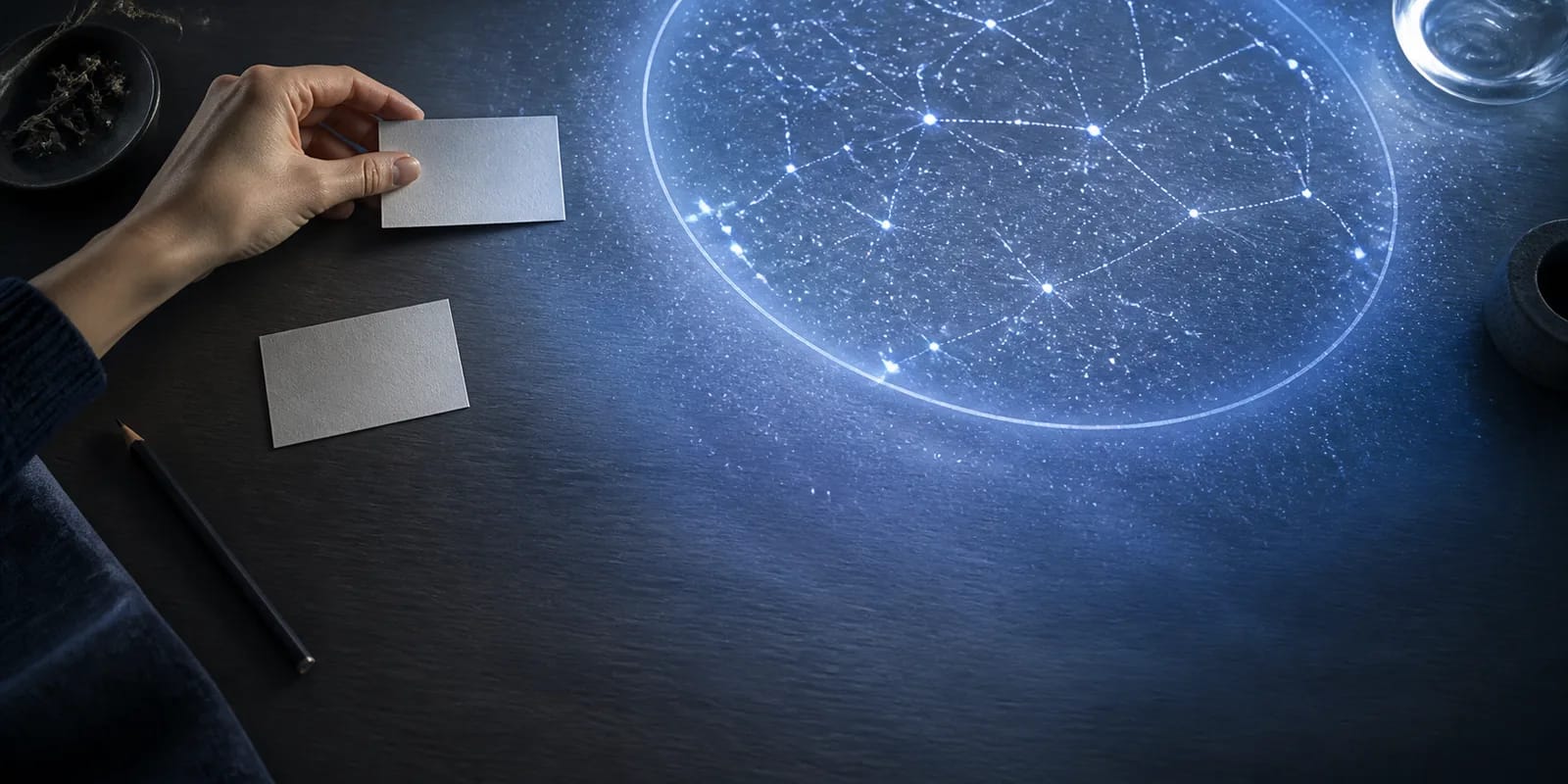
A custom star map is a decorative chart anchored to a place, date, and time. A generator takes catalogued star coordinates, calculates which directions lie above an ideal horizon for the chosen observer, and turns the result into wall art with a title and personal message.
That definition is narrower—and more useful—than saying a poster reproduces the entire night sky. A star map may omit the Moon, planets, weather, terrain, atmospheric effects, and stars fainter than its selected catalogue. Constellation lines and backgrounds can also be visual conventions rather than measured features.
Personalized posters are a modern branch of a much older practice. Celestial charts have moved from ancient artifacts and manuscript diagrams to printed atlases and digital catalogues; our history of star maps traces that progression.
How Does a Star Map Generator Work?
Implementations differ, but a transparent generator should explain five parts of its process.
1. A traceable star dataset
OwnStarMap's public input contains 8,921 records, including one record for the Sun. The renderer skips that Sun record before plotting the fixed catalogue stars. It also removes points below the geometric horizon and outside the selected design shape, so 8,921 is not the number printed on every map.
The local export is derived from the HYG database. Because the precise upstream release was not preserved when the file was imported, we do not attach an unverified version number to it. You can inspect the current evidence manifest, its checksums, and the public input files.
2. An unambiguous instant and location
The local date and time must be converted to UTC with the time-zone and daylight-saving rules that applied on that date. Latitude controls the observer's horizon; longitude helps determine the sky's rotation at the selected instant.
An incorrect time zone can rotate the chart visibly. For a historical event, use the locality and civil time recorded for that event, not the time zone where you happen to be ordering.
3. A local-sky calculation
The renderer converts the selected instant to Julian Date, derives Greenwich Mean Sidereal Time and Local Sidereal Time, then transforms fixed right ascension and declination into altitude and azimuth. Stars with negative altitude are below the ideal horizon and are not drawn.
4. A flat projection
The visible sky is a hemisphere; a poster is flat. OwnStarMap uses a stereographic projection centered on the zenith. It preserves local angles but, like every map projection, changes scale across the surface.
5. Visual choices
Theme, shape, typography, labels, constellation segments, star sizes, and background layers turn coordinates into a keepsake. These settings change the presentation, not the selected place and time.
For the complete implementation and limitations, use the public method page. The deeper how star maps are made guide explains the calculation step by step.
What to Check Before Choosing a Provider
A method you can inspect
Look for a named catalogue, an explanation of time-zone handling, a horizon rule, and a projection. “Space agency data” is too vague on its own. A provider should also distinguish input records from the points that survive filtering on one design.
Honest limits
Check whether the provider says how it handles the Sun, Moon, planets, precession, proper motion, refraction, terrain, light pollution, and constellation figures. Omitting a feature can be reasonable for commemorative art; hiding the omission behind an unlimited precision claim is not.
A live preview
A useful preview lets you verify the place, local time, title, layout, and broad star-pattern orientation before paying. Change the time by several hours or move the location to another hemisphere: the visible chart should change materially.
Clear format, price, and currency
Product formats and prices can change. Trust the values shown in the checkout for your current selection and currency, not a price copied into an evergreen guide. Before payment, confirm whether the product is a digital file or physical print, what is included, delivery terms, and the final total.
Print information that matches the product
For a physical poster, review the material, dimensions, finish, fulfillment region, and delivery estimate actually offered. Do not assume a paper weight, resolution, frame, or shipping promise that is absent from the live product page.
Which Moment Should You Choose?
The best input is a moment you can explain honestly:
- Wedding: ceremony, first dance, or another time meaningful to the couple.
- Birth: the local time and birthplace on the family record, if you want that level of specificity.
- Anniversary or first date: the remembered time; if it is uncertain, choose a documented convention and do not present it as exact.
- Memorial: a birth date, a shared memory, or another date chosen for its meaning.
- New home: the first evening, key handover, or move-in time.
The time changes the horizon orientation, but uncertainty does not make the gift meaningless. You can omit the printed time or mention only the date while still using a consistent time internally for the preview.
How to Create and Review Your Map
- Enter the event's local date, time, and place in the design tool.
- Confirm that geocoding selected the intended locality, especially where towns share a name.
- Choose the visual theme, shape, typography, labels, and message.
- Review the preview and compare a few bright-star patterns with a planetarium if verification matters to you.
- Check the currently offered format, options, final price, currency, and delivery information before payment.
OwnStarMap's preview uses the same fixed-star placement method documented on the evidence page. The current renderer does not add the Moon or planets and does not simulate the viewing conditions at ground level.
Is a Custom Star Map a Good Gift?
It can be when the recipient values the event and the design fits their space. Its strength is not that it freezes every physical detail of the sky; it connects a repeatable celestial orientation, a location, and words chosen for one memory.
Start with the moment rather than the product. If the story feels worth displaying, create a free preview, inspect the result, and decide whether the available format is right for the recipient.
Ready to capture your special moment?
Create a personalized star map in minutes.
Design my Star Map — from 12,00 €