Full Moon Calendar 2026
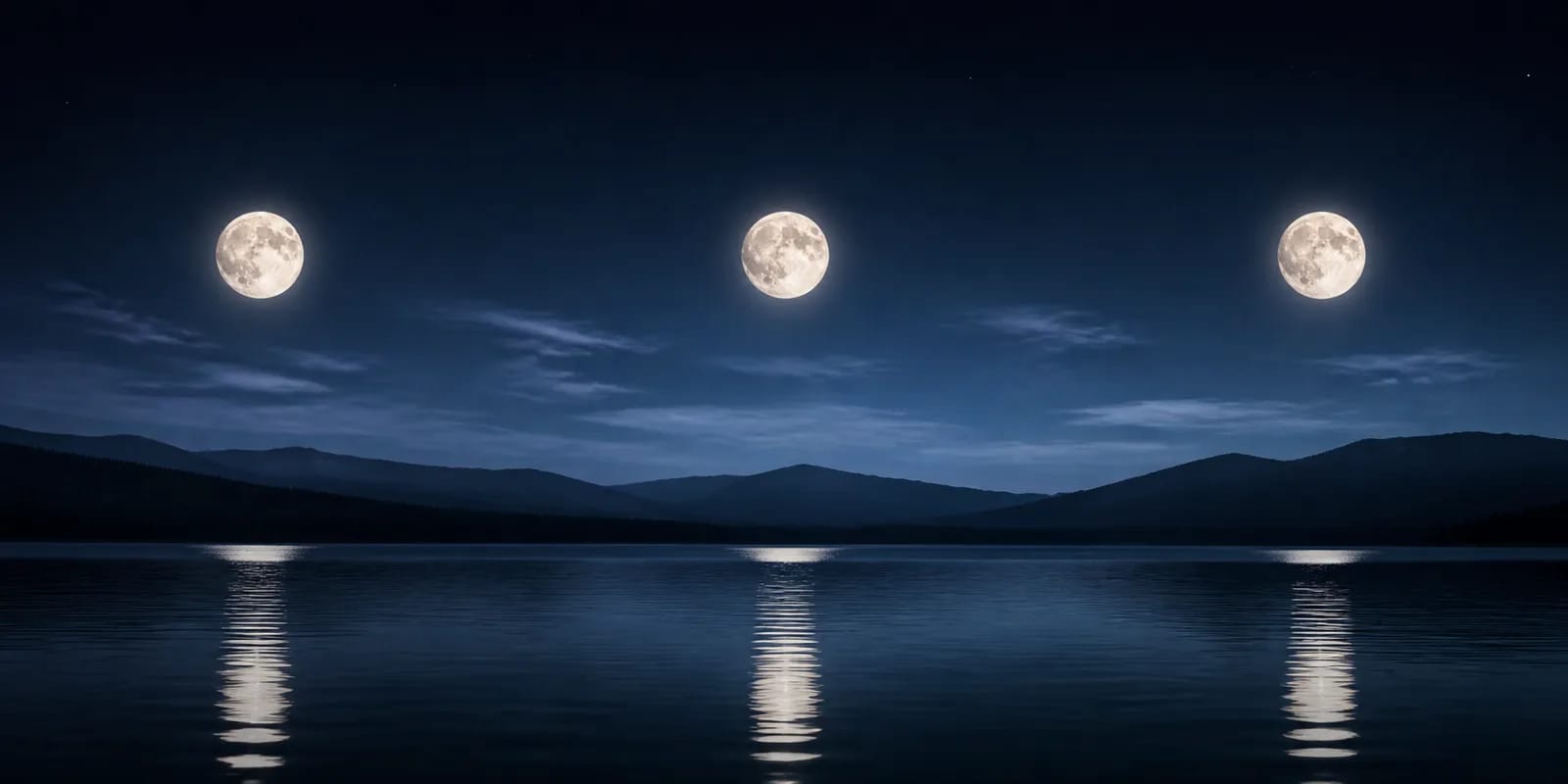
Twelve times a year, the Moon swings around to face the Sun head-on, and for a few nights our closest celestial neighbour floods the landscape with silver light. Each full moon carries a name — a thread connecting us to the farmers, hunters, and storytellers who measured their lives by the sky. Here is every full moon of 2026.
| Date | Time (UTC) | Traditional Name | Constellation |
|---|---|---|---|
| January 13 | 22:27 | Wolf Moon | Cancer |
| February 12 | 13:53 | Snow Moon | Leo |
| March 14 | 06:55 | Worm Moon | Virgo |
| April 12 | 23:22 | Pink Moon | Virgo/Libra |
| May 12 | 16:56 | Flower Moon | Scorpius |
| June 11 | 07:44 | Strawberry Moon | Sagittarius |
| July 10 | 20:37 | Buck Moon | Sagittarius/Capricornus |
| August 9 | 07:55 | Sturgeon Moon | Capricornus/Aquarius |
| September 7 | 18:09 | Harvest Moon | Pisces |
| October 7 | 03:05 | Hunter's Moon | Pisces/Aries |
| November 5 | 13:19 | Beaver Moon | Taurus |
| December 4 | 23:21 | Cold Moon | Gemini |
The next full moon is March 14, 2026 — the Worm Moon. It will shine from the constellation Virgo in the early morning hours, a luminous herald of spring's arrival.
All times are in UTC. For Eastern Time (ET), subtract 5 hours (EST) or 4 hours (EDT). For Pacific Time (PT), subtract 8 hours (PST) or 7 hours (PDT).
Full Moon Names and Their Origins
The traditional full moon names come primarily from the Algonquin, Ojibwe, and Dakota peoples of North America. European colonists adopted and recorded them, and the Farmer's Almanac popularised them across the English-speaking world. Each name is a small poem about the season — about what the land, the water, and the animals were doing when that particular moon rose.
January — Wolf Moon
In the depths of winter, wolves howled through the frozen darkness surrounding encampments. Their voices carried farther in the still, cold air of the longest nights. Also called the Ice Moon or the Moon After Yule in Celtic traditions, this first full moon of the year belongs to the silence and the wild.
February — Snow Moon
February brings the heaviest snowfall across much of North America. The world lies buried in white, and the nights are still desperately long. The Cherokee called it the Bone Moon — food stores had dwindled so low that people gnawed bones for sustenance and boiled them into broth.
March — Worm Moon
When the frozen ground finally softens, earthworms push to the surface, leaving sinuous trails in the thawing mud. It is the first tangible sign of renewal. Also known as the Sap Moon, because maple trees begin to run, or the Crow Moon, because the cawing of crows announces winter's retreat.
April — Pink Moon
The name refers not to the Moon's colour but to the wild ground phlox (Phlox subulata), one of the earliest widespread wildflowers to bloom across eastern North America. Its carpets of pink signal that spring has truly taken hold. Also called the Sprouting Grass Moon or the Egg Moon.
May — Flower Moon
May is the great floral explosion. Meadows, gardens, and woodland edges erupt in colour. This full moon celebrates the abundance that returns after months of dormancy. The Dakota called it the Planting Moon — the signal that the soil was warm enough for seeds.
June — Strawberry Moon
Wild strawberries ripen in June across North America, and the Algonquin peoples timed their harvest to this moon. In Europe it was sometimes called the Honey Moon — and this is widely considered the origin of the English word honeymoon, since June was the traditional month for weddings.
July — Buck Moon
Male deer begin growing their new antlers in July, covered in a soft layer of velvet. This full moon marks the height of summer. It is also called the Thunder Moon, because summer thunderstorms are at their most frequent.
August — Sturgeon Moon
The Great Lakes tribes knew August as the month when sturgeon — those ancient, armoured fish — were easiest to catch. This moon also signals the first grain harvests, earning it the alternative name Grain Moon.
September — Harvest Moon
The most famous of all. The Harvest Moon is the full moon closest to the autumn equinox. Its peculiarity: it rises at nearly the same time for several consecutive evenings, providing farmers with extended natural light to bring in their crops before the first frosts. In 2026, the Harvest Moon falls on September 7.
October — Hunter's Moon
After the fields have been cleared by harvest, game venturing into the open is easy to spot. This was the time to hunt and preserve meat for winter. Like the Harvest Moon, the Hunter's Moon rises early in the evening, extending useful light for tracking.
November — Beaver Moon
November was the time to set beaver traps before the rivers froze, securing warm furs for winter. The beavers themselves are also busy, finishing their dams and stockpiling food. Also called the Frost Moon, marking the season's first hard freezes.
December — Cold Moon
The nights are at their longest, and true cold settles in to stay. This last full moon of the year marks the entrance into the harshest season. The Mohawk called it the Moon of Long Nights — a name that speaks for itself when darkness falls before 5 p.m.
Notable Lunar Events in 2026
Beyond the twelve full moons, 2026 holds a few astronomical events worth circling on your calendar.
Total Lunar Eclipse — March 3, 2026
The headline lunar event of the year is the total lunar eclipse on March 3. The Moon will pass through Earth's shadow and take on a deep coppery hue — the celebrated "Blood Moon" phenomenon. This eclipse will be visible from Europe, Africa, and much of Asia and the Americas. Totality will last approximately 58 minutes, offering a breathtaking spectacle visible to the naked eye.
Partial Lunar Eclipse — August 28, 2026
On August 28, a partial lunar eclipse will be observable. Only a portion of the lunar disc will enter Earth's umbral shadow, creating a dramatic play of light and darkness best followed with binoculars.
Supermoons
A supermoon occurs when a full moon coincides with lunar perigee — the closest point in the Moon's orbit to Earth. The Moon can appear up to 14% larger and 30% brighter than during a micromoon (a full moon at apogee). In 2026, the full moons of September, October, and November will all be supermoons, with the Hunter's Moon of October being the most impressive of the year.
Micromoon
Conversely, the full moon of March will be a micromoon, as the Moon will be near apogee. The difference is subtle to the naked eye, but an attentive observer may notice a slightly smaller disc compared to the autumn supermoons.
Moon and Stargazing
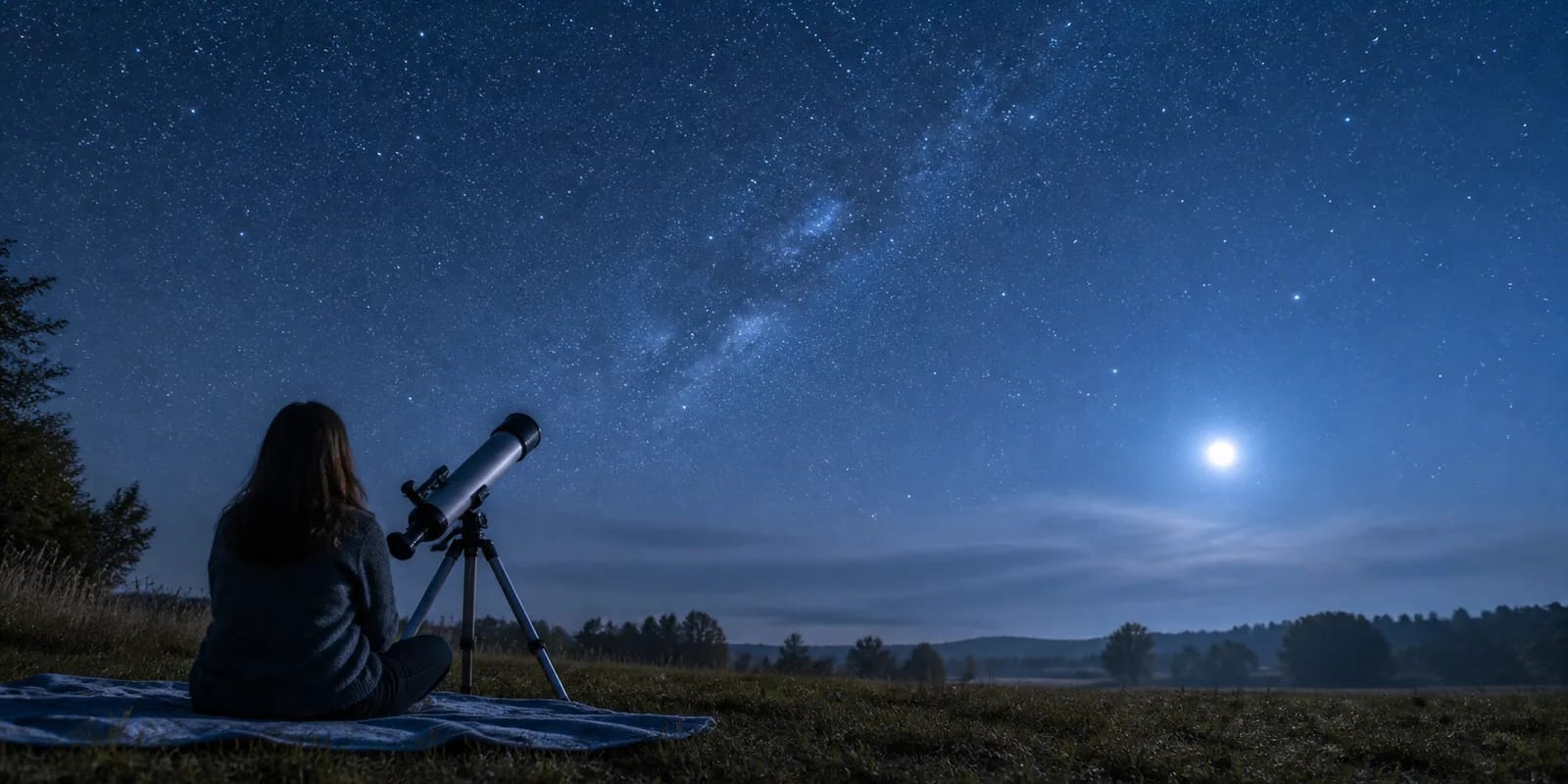
A full moon is a magnificent sight in its own right, but it is not the stargazer's friend. When the Moon blazes at full power, its brightness washes out fainter stars and drastically reduces contrast across the night sky. Astronomers call this natural light pollution.
When to Stargaze
For optimal viewing of stars and constellations, plan your outings around the new moon — when the lunar disc is invisible. You will gain visibility on the faintest stars, the Milky Way, and deep-sky objects like nebulae and star clusters.
In 2026, new moons fall approximately two weeks after each full moon:
- January 29, February 27, March 29, April 27, May 27, June 25, July 25, August 23, September 21, October 21, November 19, December 20
Your Star Map, Independent of the Moon
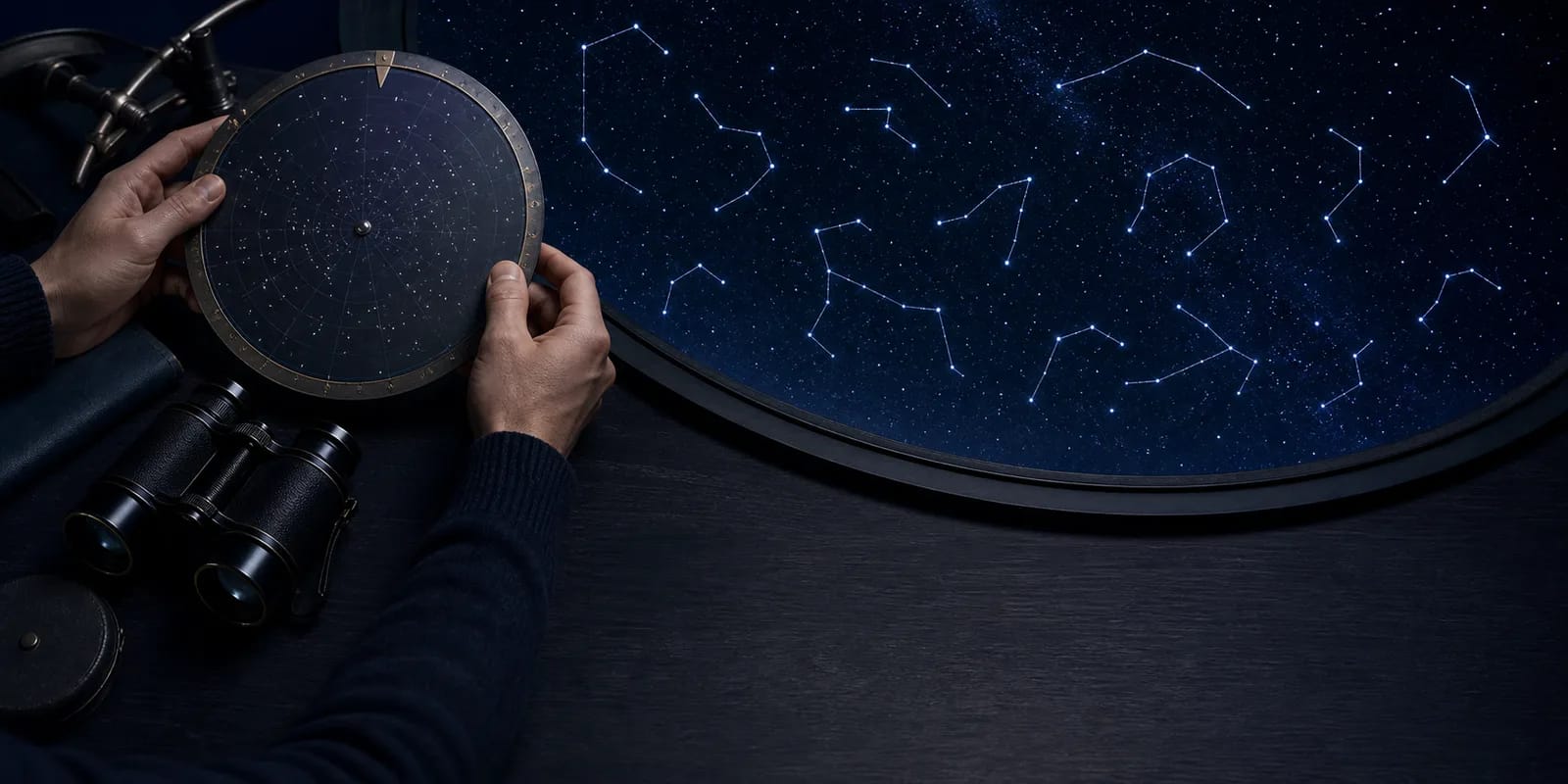
On ownstarmap.fr, your personalised star map displays the stars and constellations as they appeared in the sky on your chosen date and location — regardless of the lunar phase. This is a deliberate design choice: whether your memorable date fell on a night of full moon or new moon, the stars that were above you are always shown, even if the Moon's brightness hid them from the naked eye.
This means every night of your life is mappable. The sky on your birthday, your wedding night, the birth of your child — the stars were there, whether it was cloudy, rainy, or the full moon was outshining them all.
Discover the sky of your special date -->
Frequently Asked Questions
How often does a full moon occur?
The lunar cycle (or lunation) averages 29.53 days — the time between two consecutive full moons. This yields 12 full moons in most years, and occasionally 13 when a "blue moon" (the second full moon in a single calendar month) slips in. In 2026, there is no blue moon.
What is a supermoon?
A supermoon is a full moon that occurs when the Moon is within 90% of its closest approach to Earth (perigee). It appears slightly larger and brighter in the sky. The term was coined by astrologer Richard Nolle in 1979 and is not an official scientific definition, but it has been widely adopted by astronomers and media alike.
Can you see more stars during a new moon?
Absolutely. Without moonlight, the faintest stars become visible, and the Milky Way appears in its full glory from a dark site. The difference between a full moon sky and a new moon sky is dramatic — you can see up to ten times more stars.
Why do full moons have names?
Naming the full moons was a way of tracking time before modern calendars existed. Indigenous peoples of North America associated each full moon with the natural events of the month — blooming, harvesting, freezing, hunting. These names were passed down orally for centuries, then recorded in colonial almanacs. They remain a vivid, poetic way to reconnect with the rhythms of the natural world.
Does the full moon affect sleep?
Several scientific studies, including one published in Current Biology in 2013, suggest that sleep may be mildly disrupted around the full moon — with slightly longer time to fall asleep and a few minutes less total sleep. The exact mechanisms remain debated, but increased ambient light and possible inherited biological rhythms may play a role.
Want to explore the sky beyond the Moon? Read our astronomy for beginners guide or dive into the stories and myths behind the constellations. And if a full moon date marks an important moment in your life, create the star map of that night — the stars were there, even when the Moon was stealing the show.
Ready to capture your special moment?
Create a personalized star map in minutes.
Design my Star Map — from 12,00 €