Two Gifts, One Sky
When searching for a meaningful celestial gift, two options come up again and again: personalized star maps and "name a star" services. Both promise a connection to the cosmos, both sound romantic on the surface, and both sit in a similar price range. But what you actually receive — and whether it holds up over time — is where the two diverge significantly.
This article compares both options honestly. We sell star maps, so we have a perspective, but we'll lay out the facts and let you decide.
What Does "Name a Star" Actually Mean?
Star naming services let you pay to assign a name to a star. You typically receive a certificate with the star's coordinates, sometimes a small sky chart, and occasionally a booklet about astronomy. Prices range from around 20 to over 100 euros depending on the package.
Here is the critical detail that most of these services mention only in fine print: no star naming registry is recognized by the International Astronomical Union (IAU). The IAU is the sole international authority responsible for naming celestial objects. When they name a star, it's official and used by every astronomer on Earth. When a commercial registry names a star, it exists only in that company's private database.
This doesn't mean the gesture is meaningless — it can still be a sweet, symbolic gift. But it does mean the name won't appear in any telescope software, any scientific paper, or any observatory database. If two different people buy the same star from two different companies, both receive valid certificates for the same star with different names. Neither is "real" in any scientific sense.
What the IAU Says
The IAU has issued clear public statements about commercial star naming. Their position is straightforward: these services have no formal validity. Stars are cataloged by number and coordinate, not by commercial names. The few stars that do carry proper names — like Sirius, Betelgeuse, or Polaris — were named through centuries of astronomical tradition, not through purchase.
What Is a Star Map?
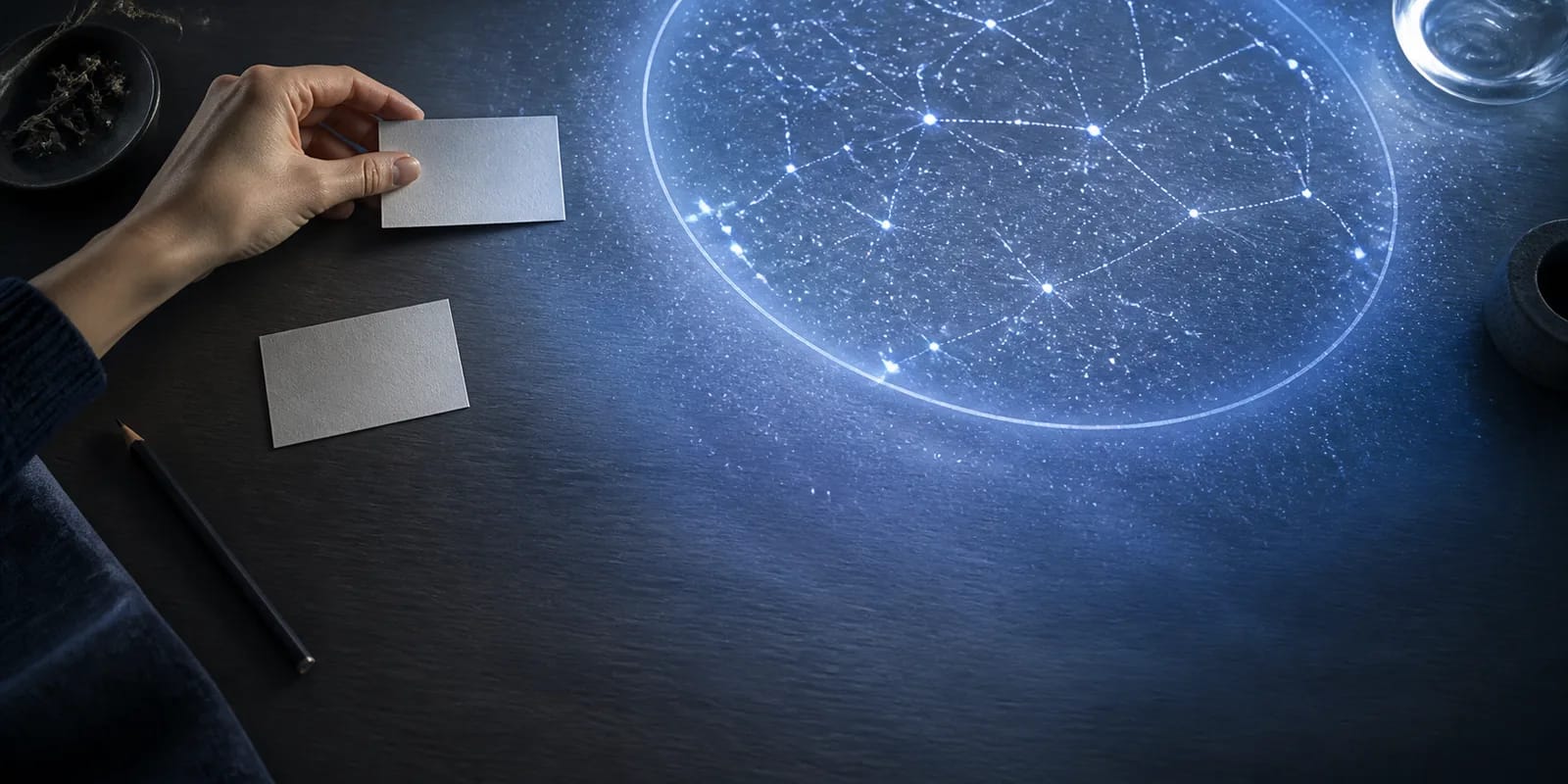
A personalized star map is a visual representation of the night sky as it appeared from a specific location, at a specific date and time. It's generated using real astronomical data — the positions of thousands of stars, the lines connecting constellations, and the orientation of the celestial sphere as seen from your chosen vantage point.
At OwnStarMap, our maps are built on the HYG star catalog, a database of over 100,000 stars with verified data from the Hipparcos, Yale, and Gliese catalogs. We display 8,921 stars visible to the naked eye (magnitude 6.5 or less), plotted using IAU-standard algorithms for sidereal time calculation, coordinate conversion, and stereographic projection. If you want to learn more about how the underlying astronomy works, our astronomy for beginners guide breaks it down in detail.
The result is a scientifically accurate snapshot of the sky — not a generic illustration, but the actual arrangement of stars that existed above a real place during a real moment.
Side-by-Side Comparison
Scientific Accuracy
Name a star: The star itself is real, and its coordinates are accurate. But the name assigned to it has no scientific standing.
Star map: Every element is astronomically accurate — star positions, constellation lines, celestial orientation. The sky shown on your map is verifiable against professional planetarium software.
What You Physically Receive
Name a star: A certificate (usually paper or PDF), sometimes a small generic sky chart, and an entry in a private database. Some services include a small booklet.
Star map: A high-resolution digital file or printed poster showing the precise night sky of your chosen moment. Multiple format options — digital download, printed poster in various sizes, with or without a frame. You receive something ready to hang on a wall.
Personalization
Name a star: You choose a name. Some services let you select a constellation. The star itself is essentially random — you have no meaningful connection to it beyond the name you paid for.
Star map: You choose the date, time, location, personal message, and design. Every element connects to a real moment in your life — the night you met someone, a wedding day, a birth, an anniversary. The personalization is tied to your story, not to an arbitrary star in a catalog.
Emotional Impact
This is where the difference becomes most apparent. A star naming certificate says: "I bought you a star." A star map says: "I captured the exact sky that was above us when our story began."
One is a transaction. The other is a memory made tangible.
When someone receives a star map of their wedding night and reads the message beneath it, they're not looking at a generic product — they're looking at the sky that existed during the most important evening of their life. That emotional resonance is difficult to replicate with a certificate.
Price
Name a star: Typically 20 to 100+ euros, depending on the package and extras.
Star map: Digital downloads start at 12 euros, printed posters from 39 euros, framed prints from 59 euros. Comparable pricing for a fundamentally different product.
Longevity
Name a star: The certificate is a piece of paper. The name exists in a private database that could disappear if the company closes. There's no guarantee of permanence.
Star map: A printed and framed star map is a piece of wall art that lasts for decades. The underlying data is based on star catalogs that have been maintained for over a century. The sky it shows will remain verifiable for as long as astronomy exists.
When Naming a Star Makes Sense
We want to be fair. There are contexts where a star naming gift works:
- For children who love the idea of "owning" a star
- As a lighthearted, fun gift when the recipient understands it's symbolic
- Paired with something else — like a star map of the same night, which adds real astronomical context to the gesture
The problem arises when someone genuinely believes the name is official, or when the gift is presented as something more than what it is.
When a Star Map Is the Better Choice
A star map is the stronger option when you want a gift that is:
- Tied to a real moment — not an arbitrary star, but a specific night that matters
- Scientifically verifiable — every star plotted using real data
- Display-worthy — wall art that sparks conversation and holds meaning
- Lasting — printed on archival-quality paper, designed to be framed and kept
For weddings, births, anniversaries, memorials, or any date that carries emotional weight, a star map captures the moment in a way that no certificate can. If you're looking for more ideas on how to use them, our guide to star map occasions covers every major life event.
Create your star map in minutes — choose your date, location, and message, and see the sky exactly as it was.
The Real Question
Both gifts point to the sky. But one gives you a name in a private database, and the other gives you the actual sky.
A star map doesn't ask you to believe in a commercial registry. It asks you to remember a moment — and it shows you, with scientific precision, what the universe looked like when that moment happened.
If you're choosing between the two, ask yourself: do you want to give someone a name, or a memory?
The sky was there. The stars were real. A star map simply captures them — honestly, accurately, and beautifully.
Start designing your personalized star map — and give the kind of gift that gets framed, not filed away.
Ready to capture your special moment?
Create a personalized star map in minutes.
Design my Star Map — from 12,00 €